A commission to capture ancient yew trees
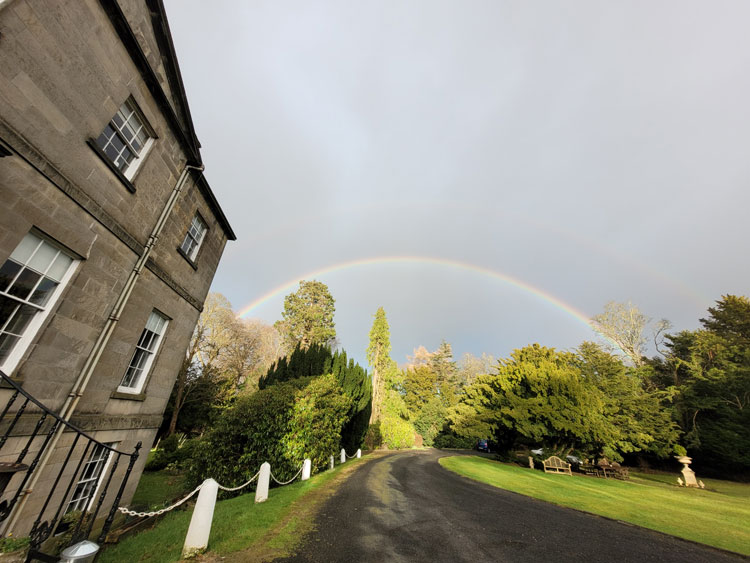
At the end of 2024 I was delighted to receive a commission from Limefield House, a Georgian property outside Edinburgh, to create paintings inspired by the yew trees on the grounds. Limefield House, built in 1805, is steeped in history and surrounded by remarkable trees: monkey puzzle, Canadian redwood and a promenade of yews estimated to be more than 1,000 years old. The yew tree project is to create two large paintings but in the process I will develop a body of work including paintings, drawings, photographs and possibly time-lapse video. I want to dive deep, researching the cultural and spiritual significance of the yew and also get to know the Limefield trees. The commission is quite open and I plan to follow where my research and imagination take me.
In the coming months as the spring weather settles, I will visit regularly to make drawings and paintings of the trees in situ which will help development of work in the studio. The invitation by the owner to visit Limefield whenever I wish is so generous. The prospect of spending time with these ancient trees is thrilling.
Working at Limefield
My art practice explores our shared yearning for meaning and connection in an increasingly fragmented and uncertain world. I often work outdoors and investigate landscape as a means to navigate the unknown, déjà vu, and the passage of time. I look for connections and disconnects, intersections of personal and collective memory which become the threads that I follow. Using paint, found imagery and stencilling, I create layered, dreamlike works.
Working in nature and especially with trees has been a part of my practice from the very beginning when I was a young teenager. But I still get a thrill at the prospect of a day spent outside working to capture what I see. For this project I plan to experiment with materials to explore dynamic form as well as the atmosphere surrounding the trees. I will take these studies back to the studio to develop larger paintings and drawings. As the weather improves I hope to make large works outside.
Starting the yew tree project: drawing outside
Feb 27th was the first day I spent drawing at Limefield House. Clear and still and a bit warmer than it had been for a few weeks, it was nonetheless a cold winter day. Weather (especially in Scotland) means that work often has to happen very fast, which is almost always a good thing. Engaging with what you are doing is difficult if you are too hot or too cold, but improvisation can lead to good ideas and surprising things surface when you don’t think too hard about what you are doing.
Yesterday for example while sitting with freezing fingers trying to draw the complex forms in front of me, I hit upon using a highlighter pen with the charcoal to get a quicker result. I really liked the effect and plan to explore it on a much larger scale.
The significance of yew trees
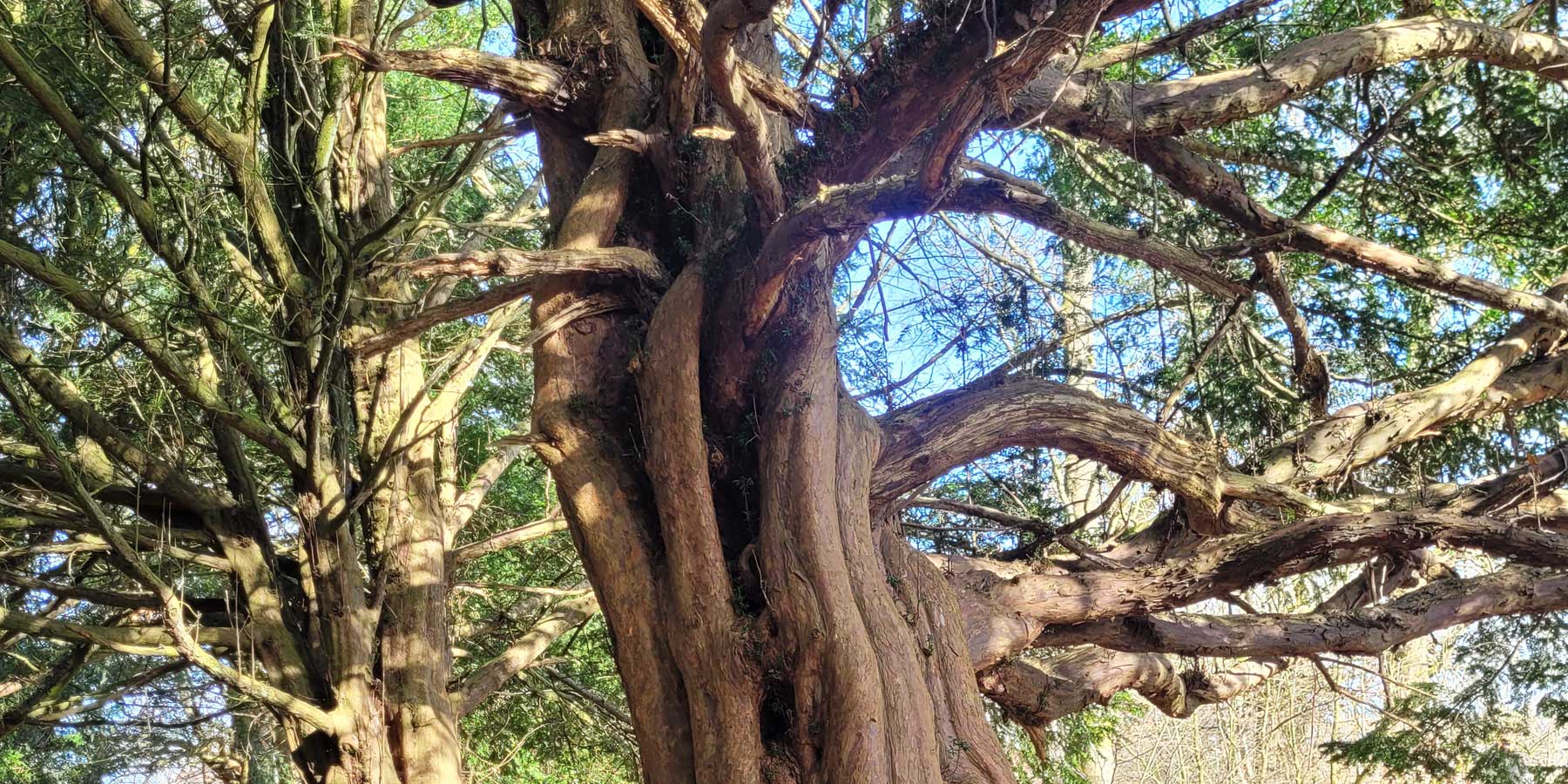
I have always been drawn to eerie, haunted places and the trees at Limefield have an uncanny quality. The pattern of the trees’ growth is unexpected and strange. They appear like ribbons twisting from the earth or intertwined figures growing in and out of each other.
Because they are evergreen and so long lived, yew trees have been associated with death and everlasting life for centuries. Of great importance to Druids they were planted at sacred places and burial grounds. As these places were replaced by Christian churches, and the yews remained, the trees became significant within Christian traditions. It is unclear why the yews were planted at Limefield house – they predate the house and possibly the fortified tower that once stood here. But the mystery adds to the atmosphere of this place.
The history of Limefield House
There has been a house at Limefield for several hundred years and the present building dates for 1805 when it was built for Mr GloagWS an Edinburgh Lawyer and later a Judge. In 1855 it became the home of the Chemist James ‘Paraffin’ Young who founded the Paraffin Industry and was responsible for creating the very first oil refinery in the world. James Young was also a good friend of the legendary explorer and adventurer Dr David Livingston, who often stayed at Limefield and planted the large Corstorphine Sycamore tree in the centre of the front garden in 1860. Livingstone also gave Young sketches and watercolours of Victoria Falls, inspiring him to create his own version in the grounds of the house.
Limefield has been a family home since 1999 and also provides venue facilities, as well as Bed and Breakfast to local, national and international visitors from around the world.