Ancient trees

A commission to capture ancient yew trees

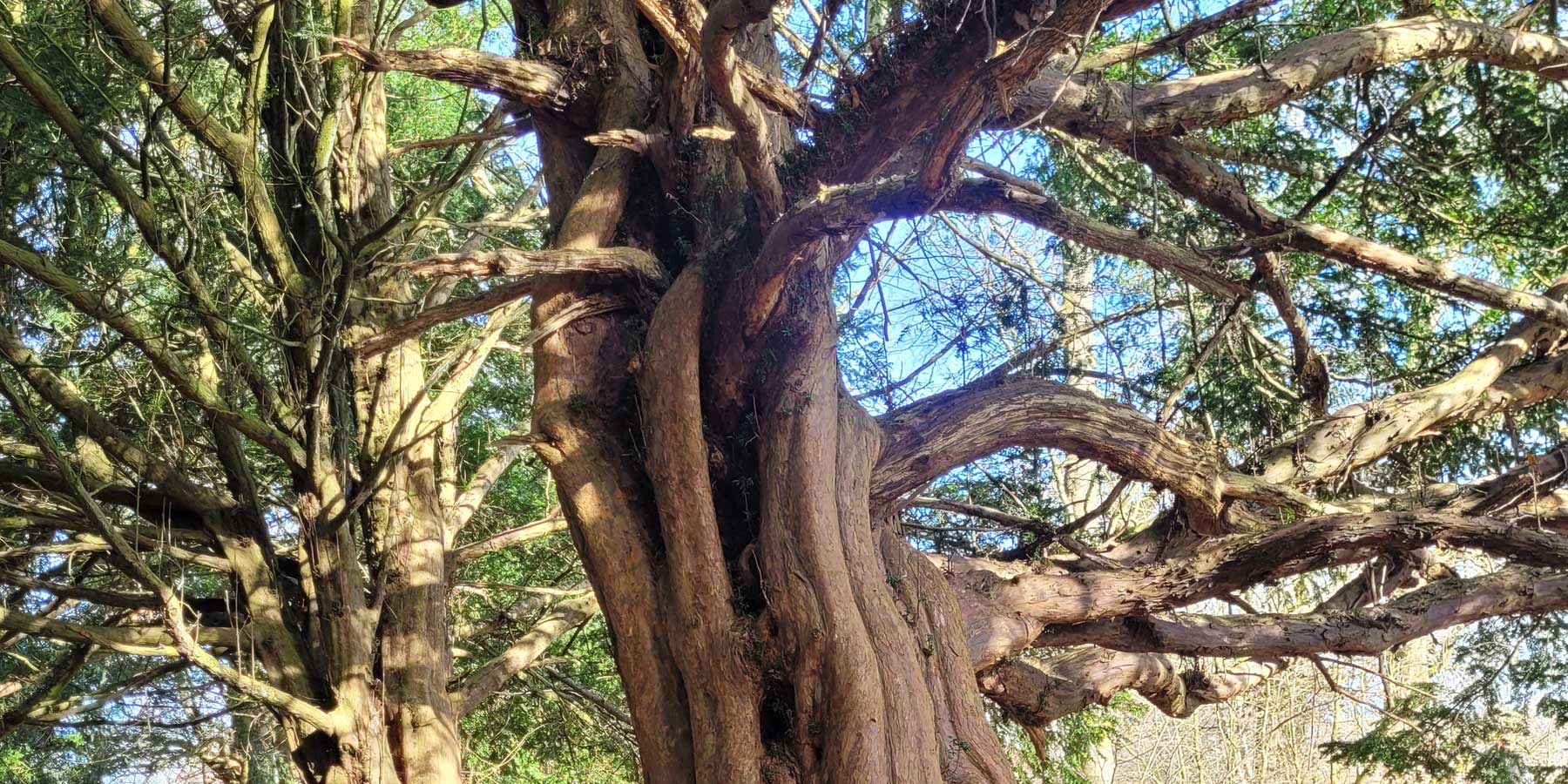
At the end of 2024 I was delighted to receive a commission from Limefield House, a Georgian property outside Edinburgh, to create paintings inspired by the yew trees on the grounds. Limefield House, built in 1805, is steeped in history and surrounded by remarkable trees: monkey puzzle, Canadian redwood and a promenade of yews estimated to be more than 1,000 years old. The yew tree project is to create two large paintings but in the process I will develop a body of work including paintings, drawings, photographs and possibly time-lapse video. I want to dive deep, researching the cultural and spiritual significance of the yew and also get to know the Limefield trees. The commission is quite open and I plan to follow where my research and imagination take me.

In the coming months as the spring weather settles, I will visit regularly to make drawings and paintings of the trees in situ which will help development of work in the studio. The invitation by the owner to visit Limefield whenever I wish is so generous. The prospect of spending time with these ancient trees is thrilling.

Working at Limefield

My art practice explores our shared yearning for meaning and connection in an increasingly fragmented and uncertain world. I often work outdoors and investigate landscape as a means to navigate the unknown, déjà vu, and the passage of time. I look for connections and disconnects, intersections of personal and collective memory which become the threads that I follow. Using paint, found imagery and stencilling, I create layered, dreamlike works.

Working in nature and especially with trees has been a part of my practice from the very beginning when I was a young teenager. But I still get a thrill at the prospect of a day spent outside working to capture what I see. For this project I plan to experiment with materials to explore dynamic form as well as the atmosphere surrounding the trees. I will take these studies back to the studio to develop larger paintings and drawings. As the weather improves I hope to make large works outside.

Starting the yew tree project: drawing outside

Feb 27th was the first day I spent drawing at Limefield House. Clear and still and a bit warmer than it had been for a few weeks, it was nonetheless a cold winter day. Weather (especially in Scotland) means that work often has to happen very fast, which is almost always a good thing. Engaging with what you are doing is difficult if you are too hot or too cold, but improvisation can lead to good ideas and surprising things surface when you don’t think too hard about what you are doing.

Yesterday for example while sitting with freezing fingers trying to draw the complex forms in front of me, I hit upon using a highlighter pen with the charcoal to get a quicker result. I really liked the effect and plan to explore it on a much larger scale.
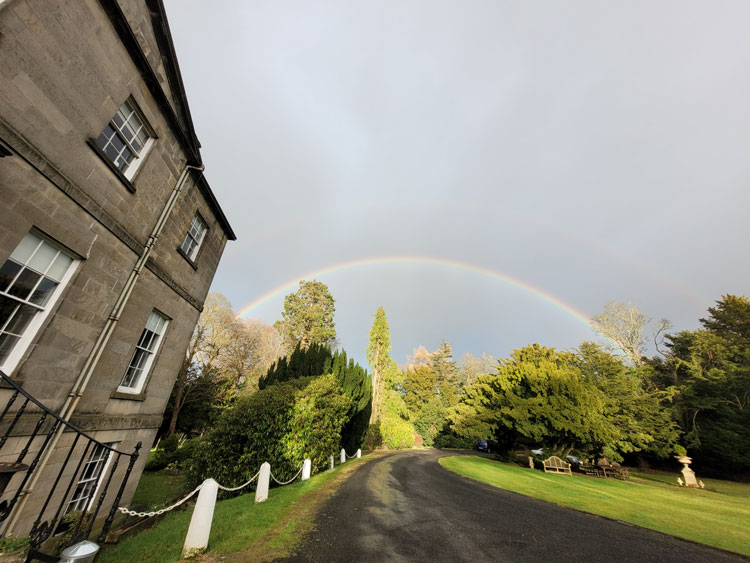
Rainbow over Limefield House after rain during the Yew Tree Project


The significance of yew trees

I have always been drawn to eerie, haunted places and the trees at Limefield have an uncanny quality. The pattern of the trees’ growth is unexpected and strange. They appear like ribbons twisting from the earth or intertwined figures growing in and out of each other.

Because they are evergreen and so long lived, yew trees have been associated with death and everlasting life for centuries. Of great importance to Druids they were planted at sacred places and burial grounds. As these places were replaced by Christian churches, and the yews remained, the trees became significant within Christian traditions. It is unclear why the yews were planted at Limefield house – they predate the house and possibly the fortified tower that once stood here. But the mystery adds to the atmosphere of this place.

The history of Limefield House

There has been a house at Limefield for several hundred years and the present building dates for 1805 when it was built for Mr GloagWS an Edinburgh Lawyer and later a Judge. In 1855 it became the home of the Chemist James ‘Paraffin’ Young who founded the Paraffin Industry and was responsible for creating the very first oil refinery in the world. James Young was also a good friend of the legendary explorer and adventurer Dr David Livingston, who often stayed at Limefield  and planted the large Corstorphine Sycamore tree in the centre of the front garden in 1860. Livingstone also gave Young sketches and watercolours of Victoria Falls, inspiring him to create his own version in the grounds of the house.

Limefield has been a family home since 1999 and also provides venue facilities, as well as Bed and Breakfast to local, national and international visitors from  around the world. 

The story of objects is the story of ourselves

Making work from memory and displacement

I am a painter based in Edinburgh, Scotland working across painting, collage, video and installation. Inspiration happens throughout the creative process. Like many artists, I am drawn to colour, found objects, memory and both real and imagined places. I don’t wait for inspiration; it is through making work that ideas and connections emerge.

In 1990 I moved from the USA to Scotland, an experience that continues to shape my work. I often describe painting as a way of restructuring what I see and remember. By bringing together different materials, images and fragments of experience, I try to create work that moves between personal memory and collective history.

From Brooklyn to rural Scotland

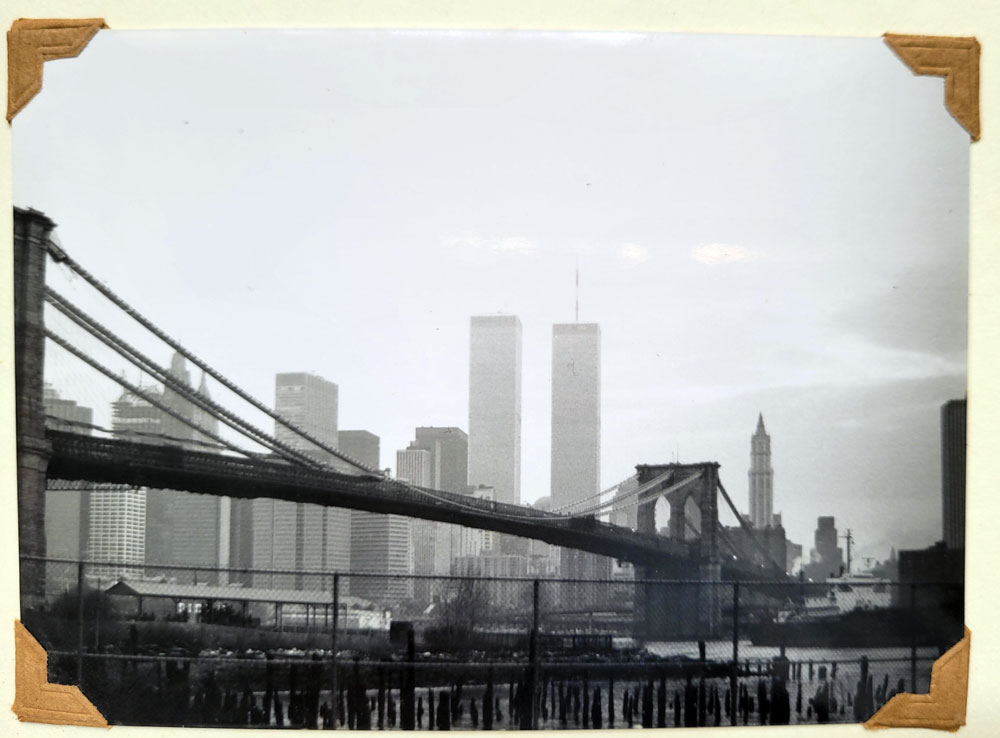
Life experiences inspire my artwork. This is a black and white photograph of Brooklyn Bridge and the Twin Towers taken in 1988
The view from Brooklyn, 1988
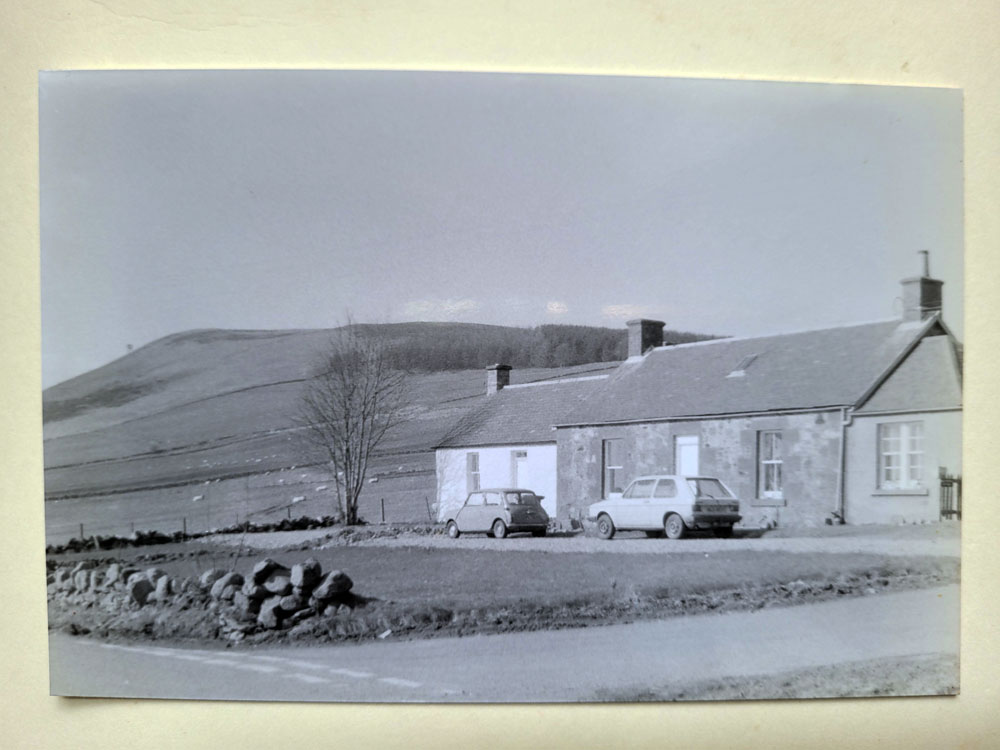
Life experiences inspire my artwork. This is a black and white picture of a farm cottage where I lived when I first moved to Scotland.
Easter Peel Cottage (right), Lintrathen, Angus, 1990

I grew up in Cleveland, Ohio before living in Vermont, Philadelphia, California and New York City, where I met my Scottish husband. In 1990 we left Williamsburg, Brooklyn for a sheep farm in rural Angus.

The contrast could not have been greater. I went from East Village bars to Women’s Institute coffee mornings. The farm cottage we rented was freezing, heated by a coal fire with an electricity meter that took coins. At first the move felt like an adventure, but over time I became aware of the deeper displacement involved in leaving one country and building a life in another.

In pre-internet 1990, migration involved a genuine rupture with the past. Letters took weeks to arrive, phone calls were rare and expensive, and flights home happened perhaps once a year. That distance created both freedom and loss. The experience continues to inform how I think about place, memory and belonging.

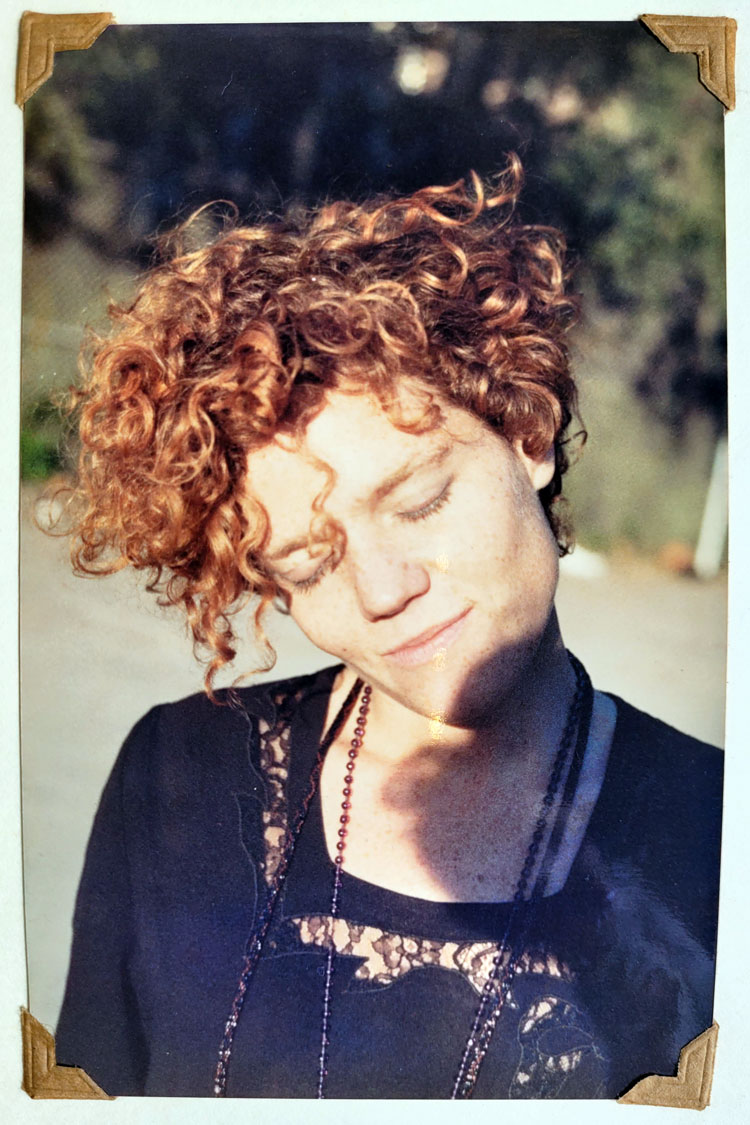
At Thompkins Square Park, Manhattan, 1988
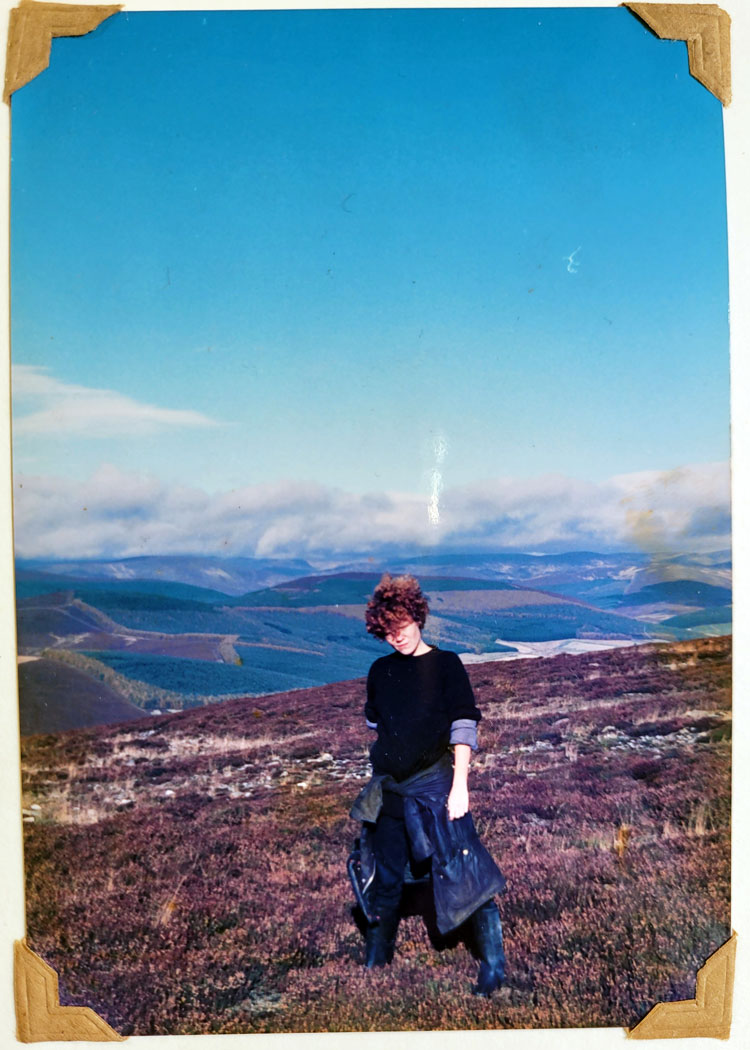
Up a hill, Dykends Crossroads, Perthshire, 1990

The story of objects

For many people who migrate, ideas of identity and home become unstable. Objects begin to carry emotional weight, acting as reminders of people, places and former lives.

In the studio, found objects and images become material to think with. Narratives, memories and visual fragments overlap through painting, collage and installation. I am interested in the tension between nostalgia and transformation — how memory can both preserve and distort experience.

In 2023 the last belongings I had left in America arrived in Scotland by container ship after my mother sold the family home. Books, photographs, letters and drawings that had sat untouched for more than thirty years suddenly re-entered my life. Opening the boxes felt strangely disorientating, as if time had collapsed in on itself.

For the first time in decades, home existed in only one place.

Casser Maison

The arrival of these objects led me back to an earlier project inspired by the French-Canadian phrase Casser Maison — literally “breaking the house” — a term associated with clearing a home at the end of a life.

I became fascinated by the emotional complexity of dismantling a home: deciding what is kept, what is discarded and what stories objects continue to carry forward. These ideas continue to shape my work, particularly recent paintings and installations exploring memory, displacement and the traces people leave behind.

In the end, objects are never just objects. They absorb history, longing and imagination. The story of objects is also the story of ourselves.

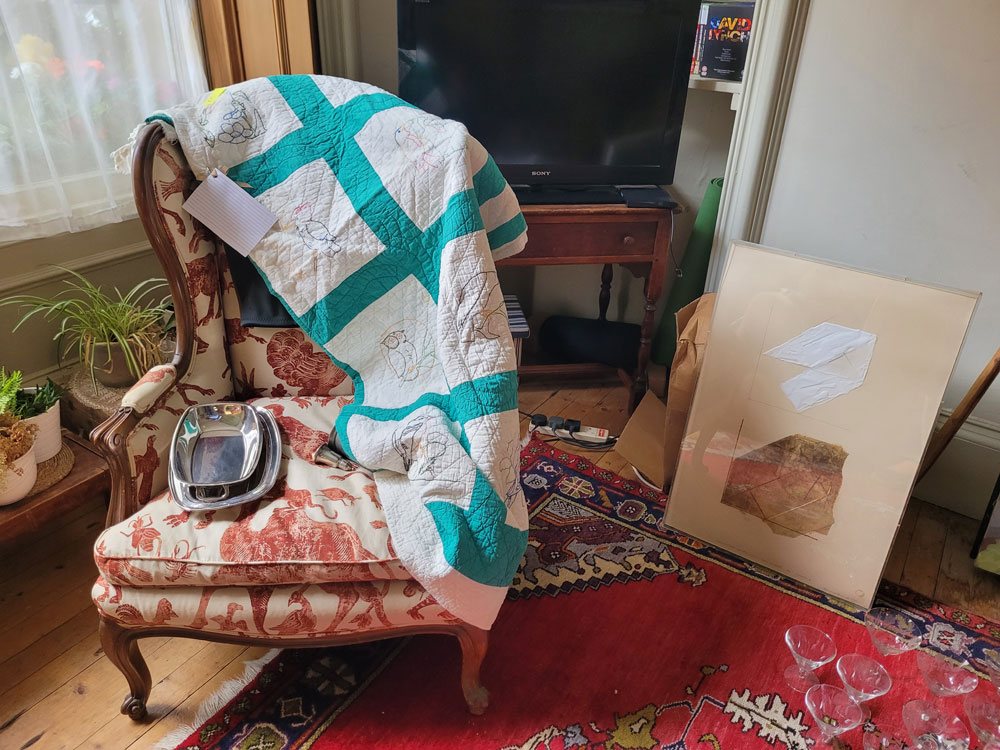
Image of a chair, a quilt and a painting
A chair and a quilt from our house in Ohio, art work by Cleveland, Ohio artist, Ginna Brand, who I apprenticed with as a teenager.
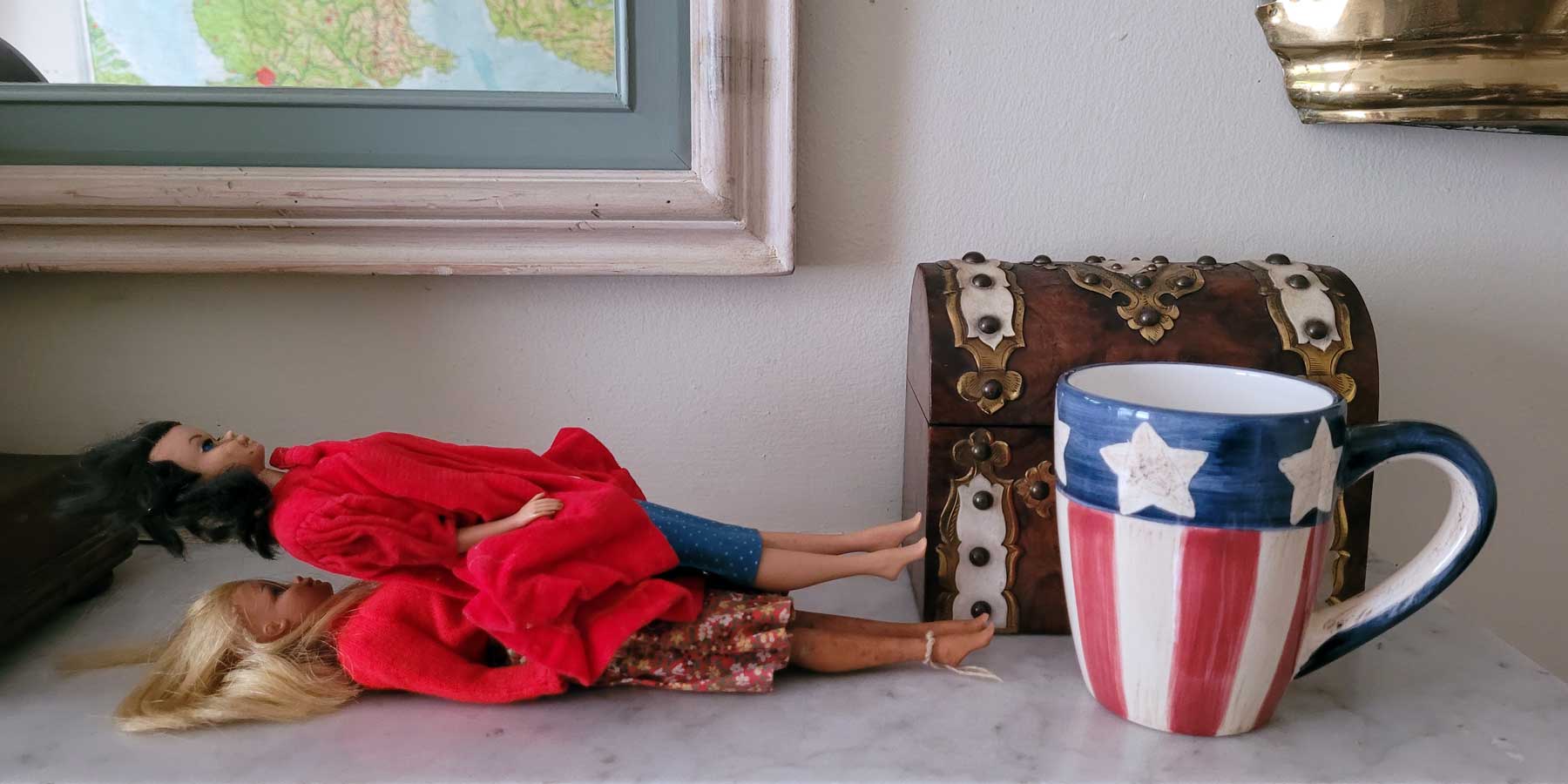
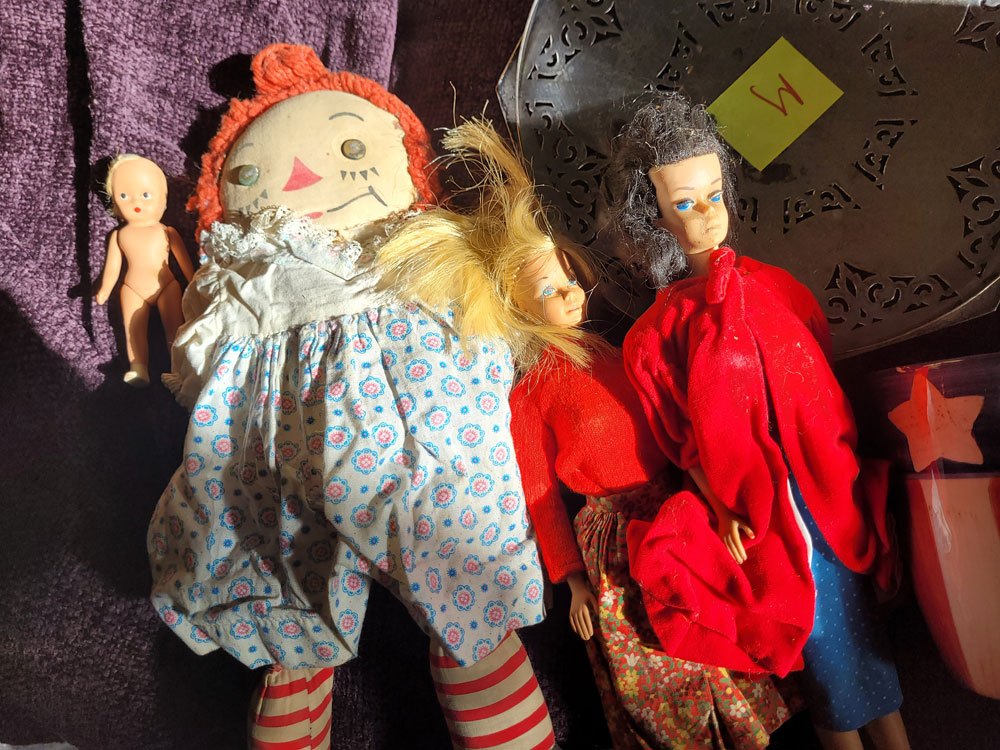
image of dolls, including Raggedy Ann and Barbie
Wee Bridget, Raggedy Ann, Malibu Barbie, and 1950’s Barbie

The strangest thing I ever found on a beach

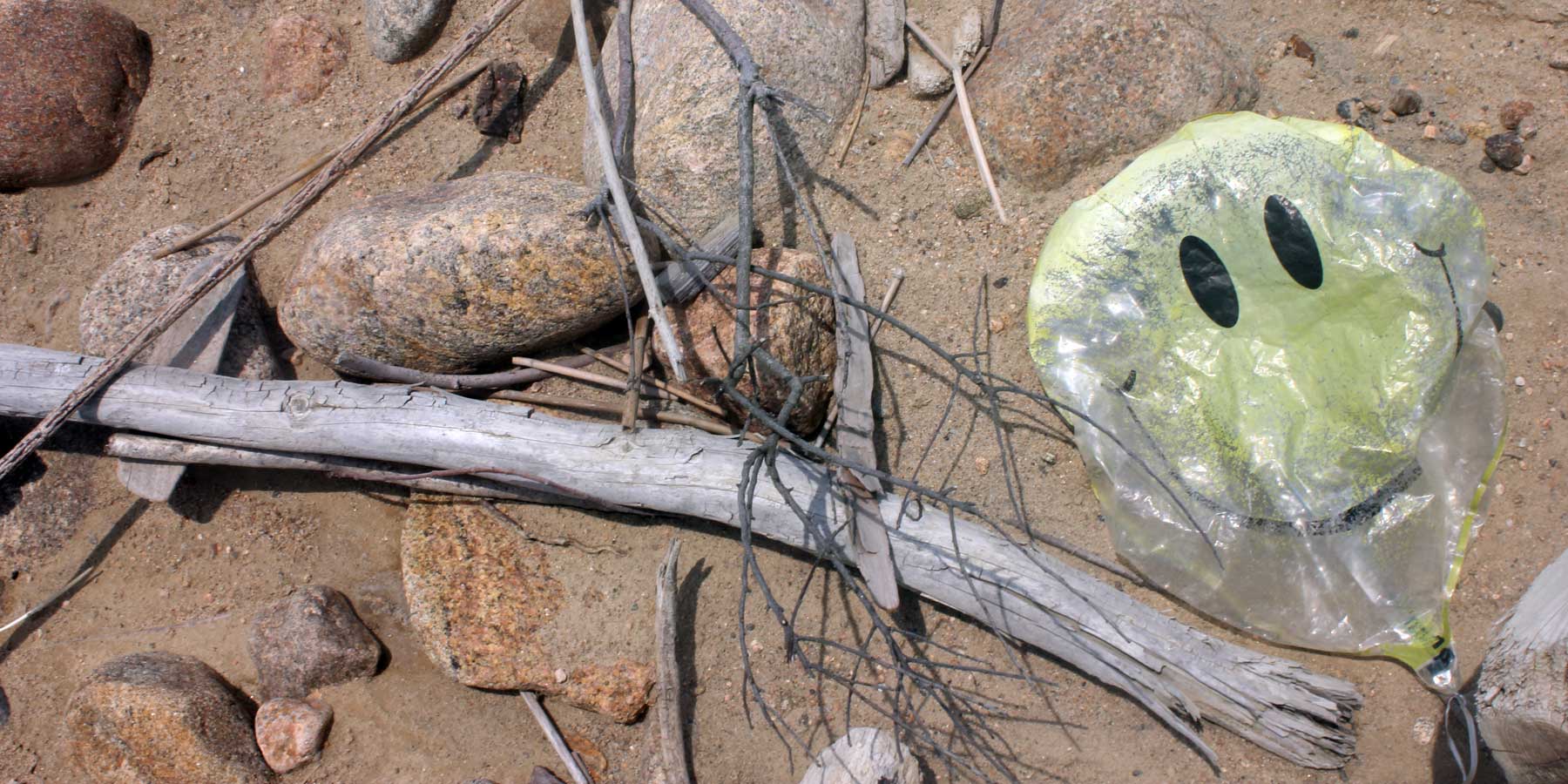
Deflated smiley-face balloon beside driftwood on a remote beach on Block Island


Beachcombing on Block Island

The beaches beyond Southwest Point on Block Island are wild and often deserted. Trees, boulders and the detritus of the shipping industry wash ashore along the ocean-facing side of the island, while people remain largely absent.

For years I have collected cellophane balloons washed up on this remote Rhode Island beach. Tangled in seaweed, wrapped around rocks or half buried in sand, they began as curious finds and gradually became something more resonant and troubling.

GYRE, The piece I created for Reuse, Reinvent Reimagine started with the beachcombing ; the process of acquiring junk, trash, stuff to be sorted later.Walking along a beach, a place I call home at a time in my life where that term represents many places many times.  a work constructed entirely from balloons I have recovered from a remote beach off the east coast of America, will be shown as part of Reuse, Reinvent, Reimagine an exhibition of ten Scotland based artists which is on at Gallery 23 as part of the Edinburgh Fringe from Aug 10th – 28th.

GYRE

These recovered balloons became the basis for GYRE, a body of work constructed from found marine plastic gathered over many years. Tied to rituals of celebration and commemoration, balloons become strangely sinister once discarded: relics of consumer culture transformed by the sea.

The project explores our emotional attachment to objects and the turbulence of memory associated with them. I am interested in how objects move between intimacy and waste — treasured one moment, forgotten the next — and what this process of collective forgetting reveals about our relationship with the environment.

Alongside the installation, I also created transfer drawings using imagery and text taken from the recovered balloons, inspired by techniques pioneered by Robert Rauschenberg. Fragmented slogans and faded graphics become traces of memory, consumption and loss.

Objects and memory

As anthropologist Daniel Miller writes:

“objects are important not because they are evident and physically constrain or enable but often precisely because we do not ‘see’ them.”

Perhaps the real power of these objects lies in how easily they disappear into the background of everyday life — until they return to us again on the tide.

Work from GYRE has been exhibited at Gallery 23 during the Edinburgh Fringe and later developed further for exhibition at the Edinburgh College of Art Tent Gallery. The project continues to evolve through new installation work exploring memory, materiality and environmental loss.


The impossibility of memory

In the late 1980s I lived in Southside Williamsburg, Brooklyn, at a time when more than 2,000 people a year were being murdered in New York City. The neighbourhood was intense, unstable and full of contradictions — violent and dangerous, but also creatively alive.

In 2012 I returned with a camera, trying to reconnect with the atmosphere of that time and place. The resulting video documents both the impossibility and persistence of memory: the attempt to recover fragments of the past from a city that has transformed almost beyond recognition.

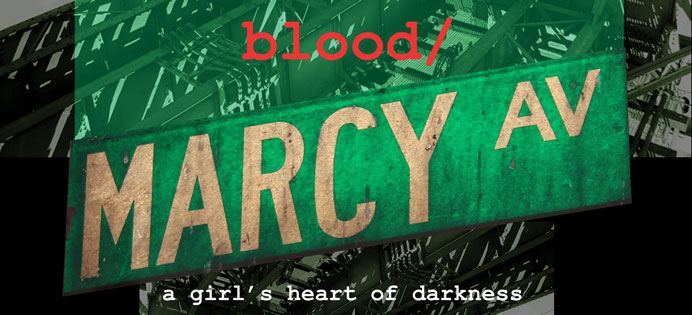
The video also shows me in the studio working on drawings connected to blood/MarcyAV, a collaborative project with sound artist Lynne Thermann and poet Sheila Black.

Together we explored nostalgia, youth, urban violence and the emotional residue carried by places and objects. The project combined drawing, painting, moving image, sound and text to reflect on the city as both a lived reality and a remembered space.

As Lynne Thermann wrote:

“The show presents what survives from a shared city of dreams, which now exists only in artifacts of terror and love.”

More than a decade later, these questions about memory, displacement and the stories attached to places continue to shape my work.