
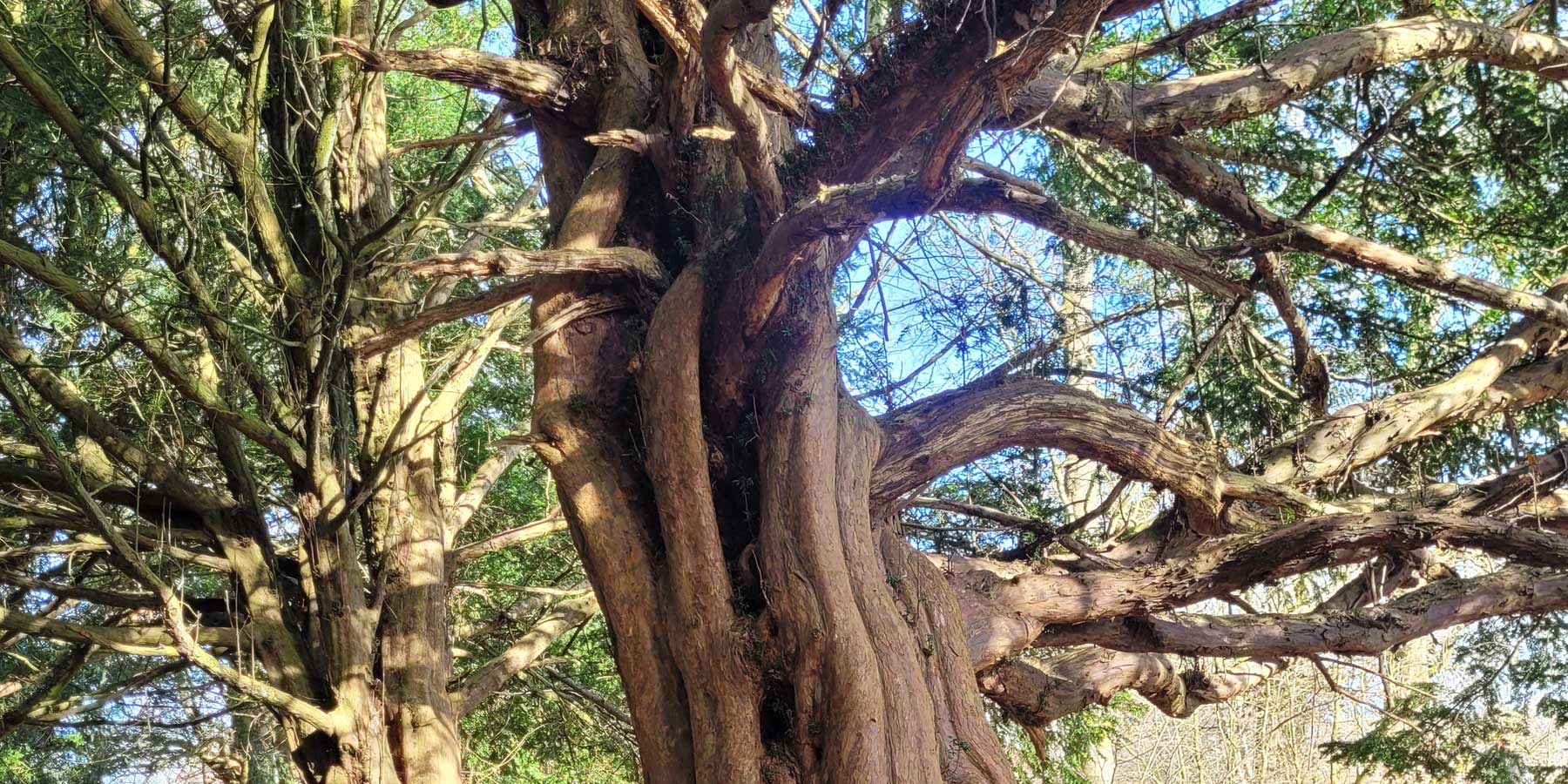
The afterlife of objects

CONSTELLATIONS and the rituals of return

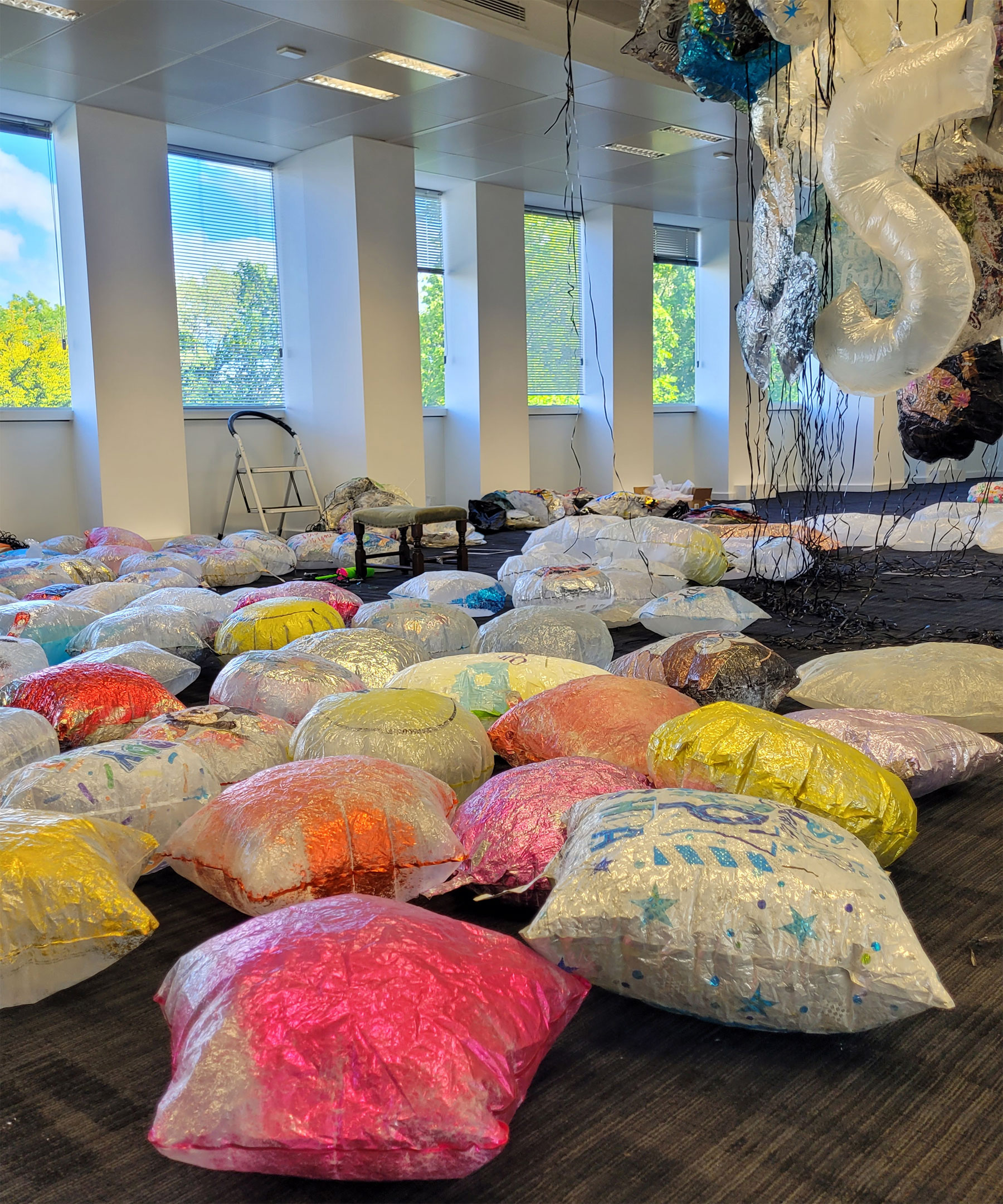
This month I am developing a new sculpture CONSTELLATIONS for Hidden Door 2026 at the Paper Factory, Edinburgh. June 3rd – 7th.

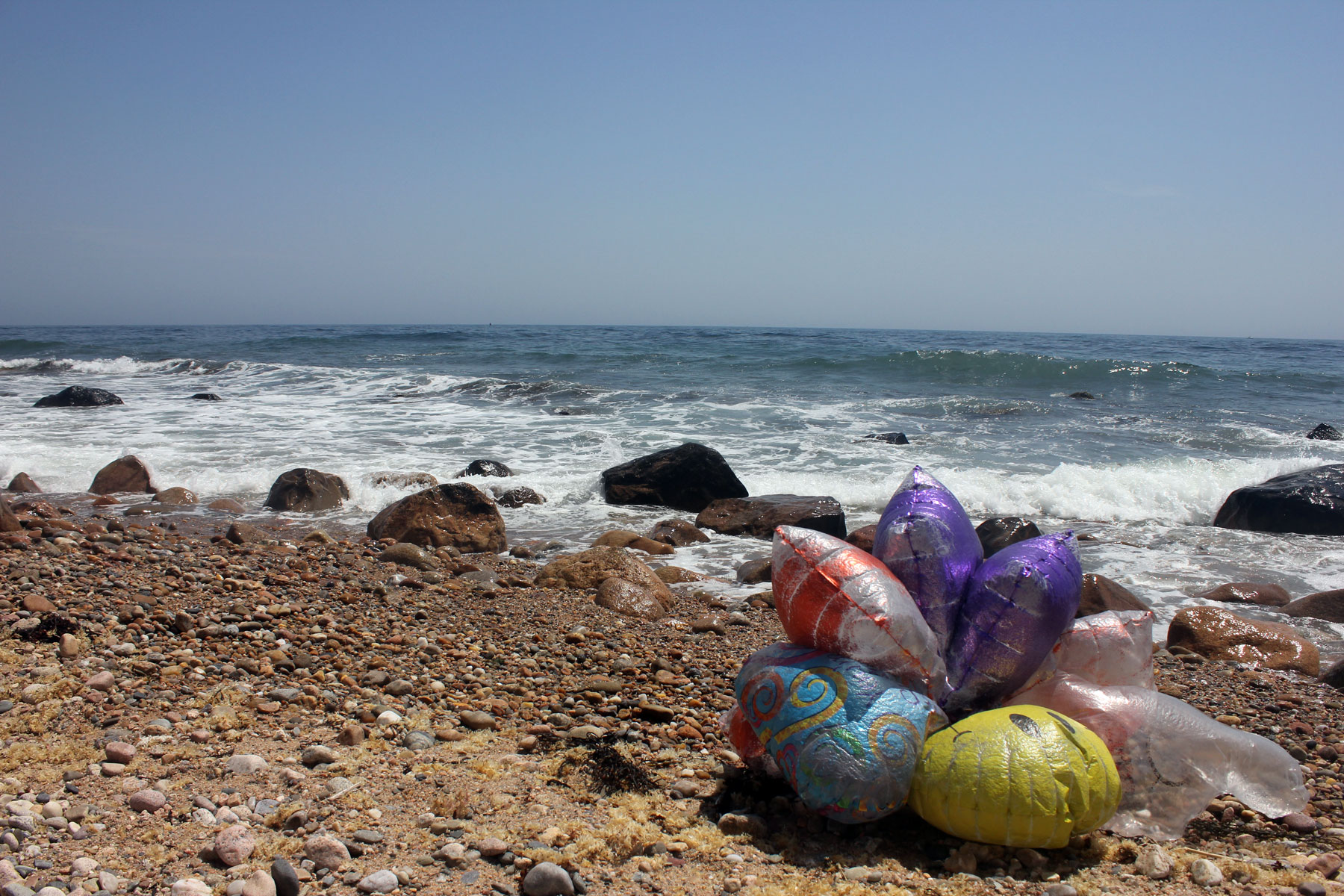
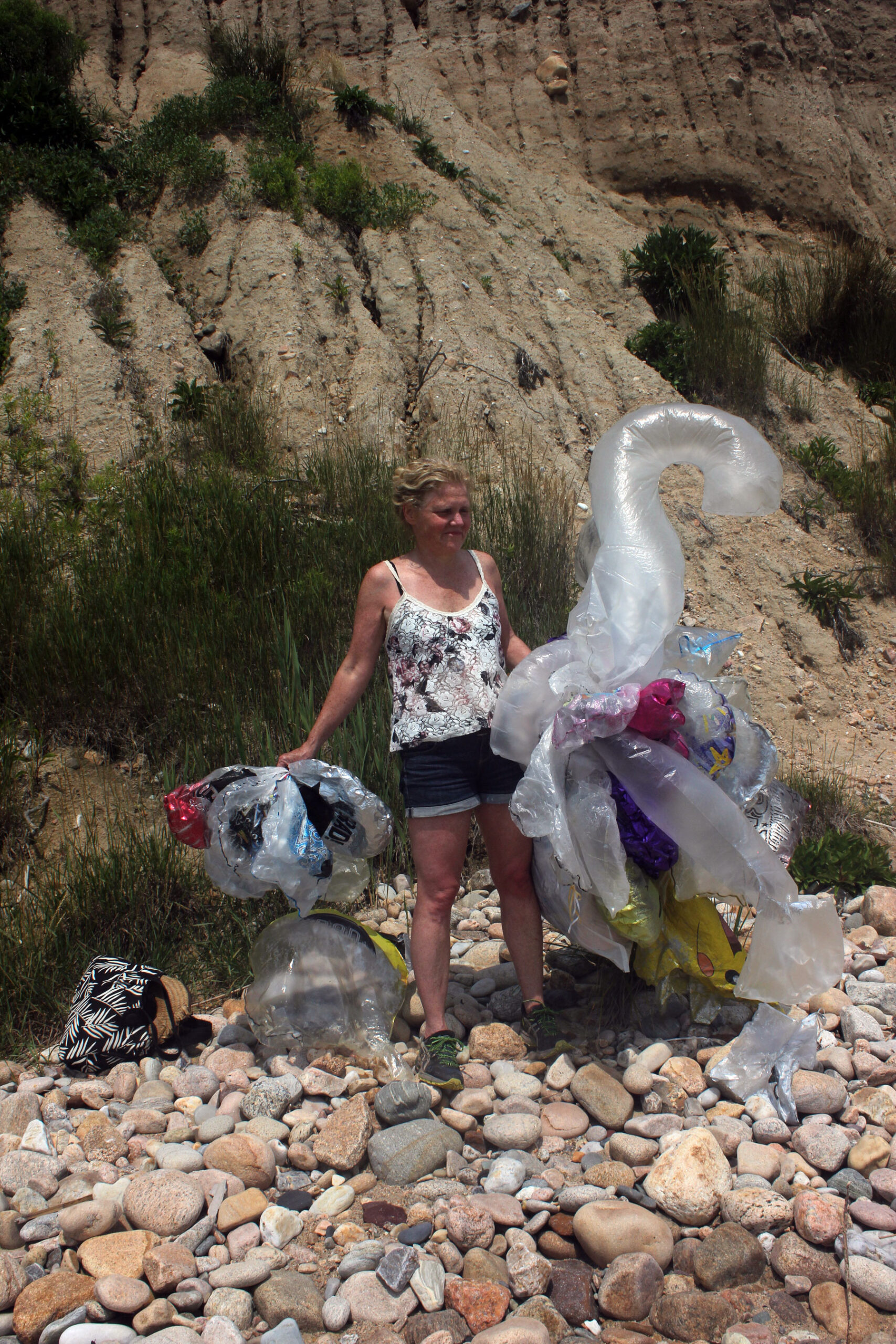
Created entirely from found objects CONSTELLATIONS emerged from a mystery: an increasing number of foil balloons washing up on a remote beach on Block Island a small island off the coast of New England, a place I once called home.

Southwest Point beach on Block Island is a dynamic place, with eroding clay cliffs, massive boulders and waves rolling in off the open Atlantic. Every kind of thing washes up there: trees, fishing machinery, dead animals. We once found the entire skeleton of a sturgeon, over a metre long.

My family have walked this beach since the 1970s, when Block Island was still a relatively sleepy place of fishermen and day-trippers who rarely made it beyond the town and swimming beaches on the east side. We first came to the island in 1974, all the way from Ohio — two days driving in a station wagon, us four kids in the back, my parents in the front. My father was from New England, and the east coast was always where we gravitated.

The West Side

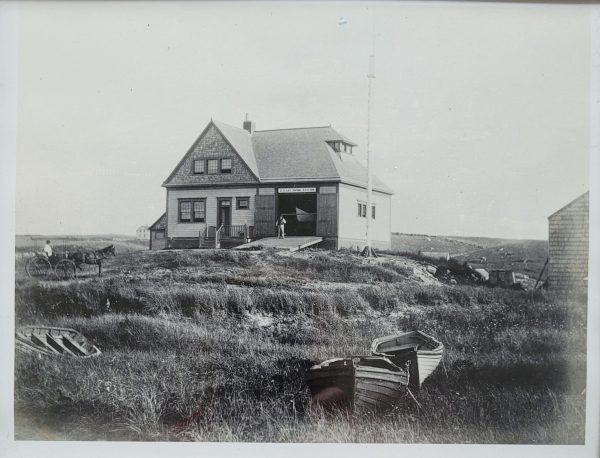
The old Lifesaving Station, Block Island
The Lifesaving Station on Cooneymus Road, Block Island

After several summers renting, my parents bought a house: an historic lifesaving station on the west side at the end of Cooneymus road which was five miles from town. The Lifesaving Station was appropriately situated at the southwest corner of Block Island where the Long Island Sound meets the open Atlantic. The many shipwrecks that took place there are part of the island’s history, folklore and ghost stories. My twin sister and I were convinced that the station was haunted. An experience I had of sleep paralysis in the house was a singular one – but that’s another story. By the 1990s my parents had retired to Block Island and moved from the Lifesaving Station to a more comfortable modern house higher up the bluffs, away from the incoming tide but still within walking distance of the beach.

When I moved to Scotland from New York City in 1990, Block Island became home in a different way. Walking from Southwest Point along the beach to Black Rock — a seven-mile loop — became a kind of homecoming ritual. It is a harsh place – definitely not a place for swimming. There is no shelter, only the sea and the looming clay head cliffs that remain inaccessible until Black Rock, where there is a surfers’ beach and path up the bluffs and back inland. It’s best to do the circuit on a calm day at low tide to avoid being cut off and once you begin, you either keep going or turn back.

Raising the dead

Around 2008, in addition to the usual flotsam, masses of foil balloons began appearing on the beach: clinging to rocks, tangled in seaweed, caught in the cliffs. Instinctively I began collecting them. They were oddly beautiful — eroded messages and colours, strange inflated shapes. Sometimes entire bouquets washed ashore. What began as curiosity slowly became an obsession. I started with one or two, but eventually collected more than a hundred on a single walk. The sheer number was staggering. Where had they all come from?  I found myself imagining anniversary parties in Montauk, birthday boat trips on Long Island Sound, graduation celebrations in Point Judith or Newport. The balloons were gestures of celebration that had returned as debris and sometimes death. In 2017 I found a purple plastic balloon wrapped around the skeleton of a dolphin. 

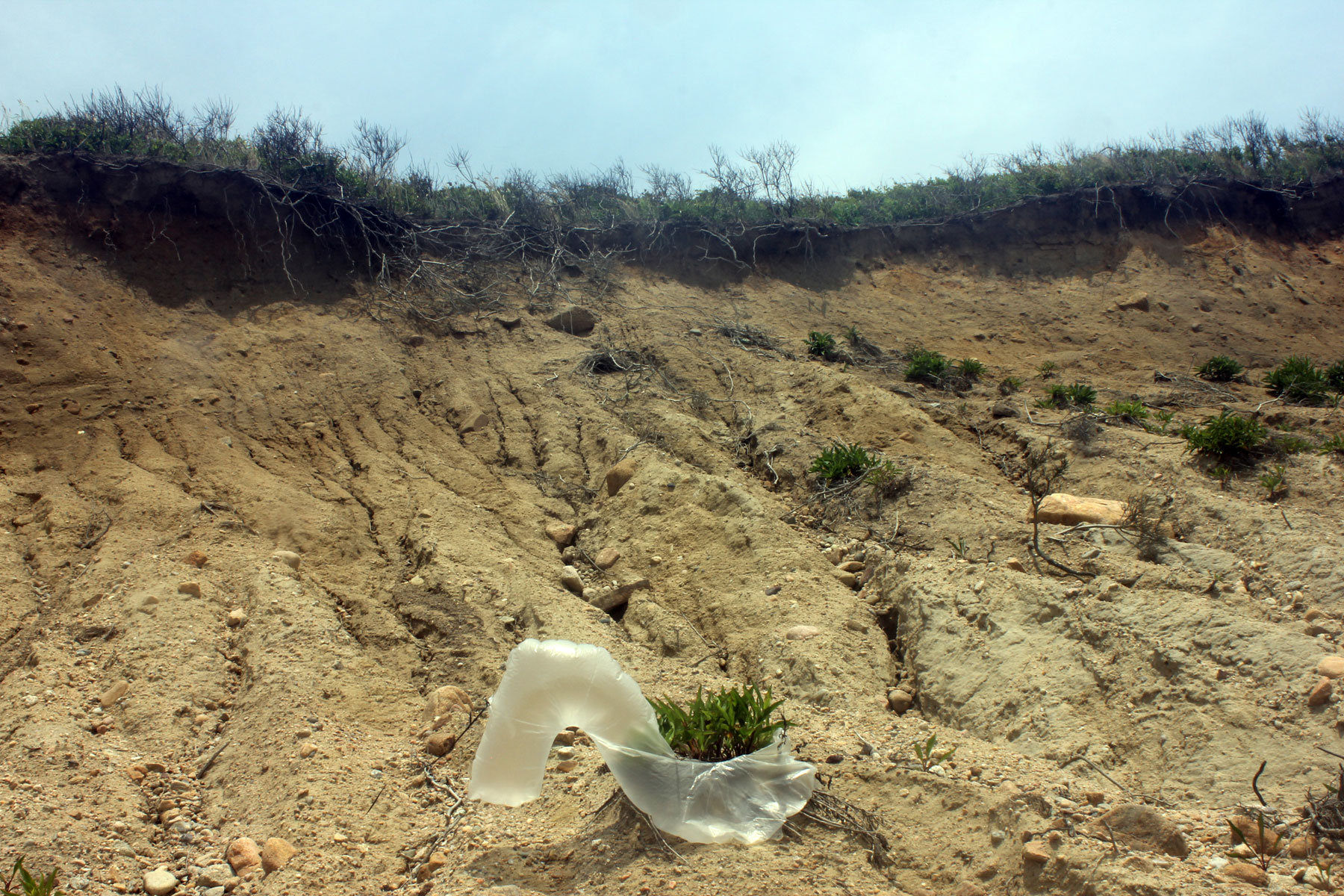
A balloon up on the bluffs
A dead dolphin with balloon

Constellations

Over the years I have repeatedly worked with these materials in my studio back in Scotland, which became a kind of commemorative act — a way to dispel the cloying nostalgia I find overwhelming. There is something matter-of-fact about their banality, the garish colours, repetitive messages. They are cheap and sentimental, easily manufactured and discarded. Yet in their eroded form they become strangely beautiful. Working with these objects I am returned to the immersive quality of memory, as a place of projection and daydreaming, a slow untangling of meaning and making. 

And in the process of making, something else begins to emerge. These scattered objects begin to form a kind of constellation — what Walter Benjamin described as fragments of the past suddenly coming together in the present to reveal a hidden truth about history. In a flash, I see the scale of their proliferation across the planet, and our remarkable ability to remain blind to it.

The relentless cheerfulness of these objects disguises the reality of what they are: environmental blight tangled up with sentimentality, consumption and excess. Yet however beautiful or uncanny they become, you can never entirely escape the darkness at their core.

On Block Island, 2017
My studio, May 2026

Empty nest, a midwinter haunting

As midwinter approaches and the nights draw in, it’s time to sit comfortably and contemplate the passing year.

Instead this year I decided to paint and decorate our flat for the first time in a decade. The process of clearing, cleaning and repairing set me thinking about ghost stories and the cycle of loss and renewal at year’s end.

It started by my wanting to freshen up the bathroom which had gone a bit mouldy around the edges and continued into my children’s bedroom, which I had been gradually taking over as my own. Both my children have well and truly flown, one to Canada and one to Spain, travellers like their parents. But after a visit from my boys in October – the first time we had all been together in two years – the usual cycle of visiting and goodbyes left me feeling bereft. EMPTY NEST the casual term to describe the bafflement of mother and father bird suddenly finding themselves alone, didn’t quite cover the wave of existential nostalgia and grief, that I felt. It was as if my heart had caught up with my head, woken to the obvious fact that the direction of travel of my children was away. The coats I kept by the door, the clothes in the cupboard, the guitar racks on the wall no longer had a function. Our quirky, slightly overstuffed family home for four had morphed into a museum for two.

Entropy

As I emptied \the rooms to paint, the flat’s good Victorian bones were revealed, but also the decay I had been avoiding for years – moth in the corners, dinged skirting, holes in the wall. Ancient coal dust (yes coal dust) behind the shutters. My eyes were opened to decay throughout the flat – the cobwebs hanging high on the ceiling – which Google tells me are each a home for long dead spiders – spurred me on. Our flat reminded me of Miss Havisham’s room where, to quote Great Expectations, “everything … had stopped, like the watch and the clock, a long time ago.” 

But the uneasy fact is that time never stops.  To paraphrase the second law of thermodynamics, a concept that emerged in the early 19th century from the observation of steam engines – the overall disorder (entropy) of the universe, as a whole system, is constantly increasing. The direction of spontaneous processes, commonly referred to as the “arrow of time” goes in only one direction eg. that broken cup on the floor is not going to leap up and mend itself.


The secret life of objects

Working in my now intentionally deconstructed house, I was alert to the entropy that had been progressing unseen for years. It was startling and a little dark to realise that the small box of pebbles in a drawer, my mother’s broken necklace, the photograph of my twin sister, all intensely valued artefacts, were well on their way to becoming silt. Larger items of furniture many inherited as parents died or downsized felt oddly transitional –were they permanent or just passing through? I remember coveting these things in an earlier time when I owned little and craved a more ‘grown-up’ house.  With age I begin to see that I don’t really  ‘own’ these things, that stolid and impenetrable they have a life of their own, and will probably outlast me.  In fanciful moments I think that my possessions, like the furniture in Guy de Maupassant’s short story Qui sait, could take flight and go for a walk in the moonlight:

Perhaps my things will go to live somewhere else and let me live quietly but I doubt it. Lying in bed at night looking at the cobwebs, objects become harbingers, telling me that it is I, not them, at the entropic centre, and like Miss Havisham I am in danger of haunting my own house.

 ” I presently distinguished an extraordinary shuffling and stamping of feet on the staircase, on the floors, on the carpets; a sound not only of boots and’ human shoes, but tapping of crutches, of crutches of wood, and knocking of iron crutches which clanged like cymbals. And behold, I perceived, all at once, on the door sill, an armchair, my large reading chair, which came waddling out. Right into the garden it went, followed by others, the chairs of my drawing room, then the comfortable settee, crawling like crocodiles on their short legs; next, all my chairs bounding like goats,and the small footstools which followed like rabbits.”

Qui sait?, Guy de Maupassant

Old Marley was dead as a doornail

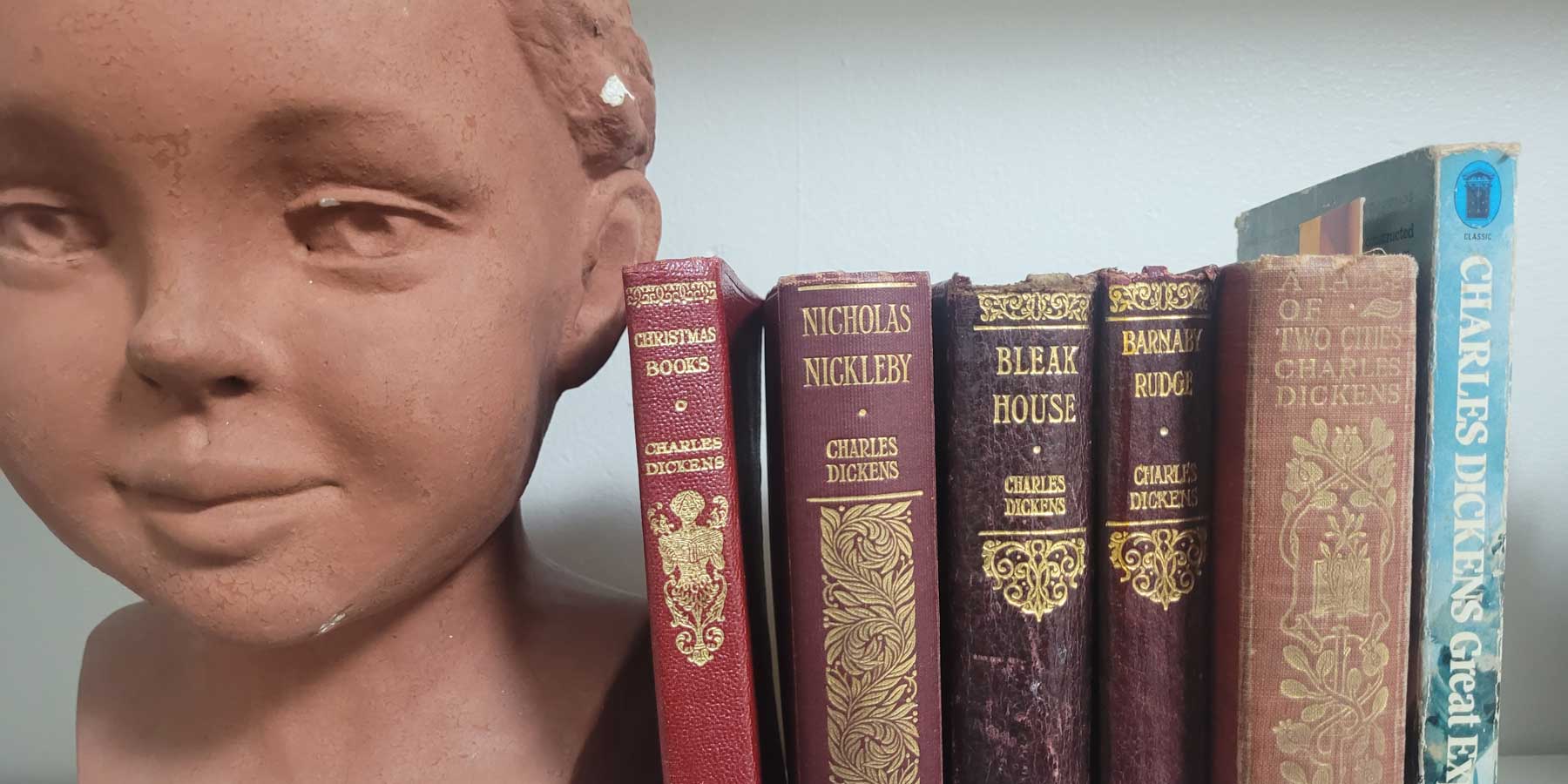
In midwinter I am drawn to the books of Charles Dickens, in particular, A Christmas Carol. It is a story that my mother read to us as children and that I in turn read to my own children. Each successive generation intrigued by the ghost story but confused by the Victorian language waited to grow up and read it for themselves, which I do every year.

As a harbinger of bad karma and missed opportunities you can do no better than Jacob Marley’s ghost, the first terrifying vision that opens the story of Scrooge’ s encounter with his own life. Marley’s visitation of Scrooge, is both generous and selfish and full of despair. Haunted by the shortcomings of his own life he  wishes to set things in order, spare his old friend a similar fate. But there is something disingenuous about Marley – it is unclear what is driving him. Is he a (dis) embodied conscience from God? A product of Scrooge’s imagination or even indigestion (“there is more of gravy than grave about you”). How is this form of ghostly housekeeping all going to work out? It is never clear whether Scrooge has had an encounter with the supernatural or just a particularly bad dream. And in the end, A Christmas Carol emanating from the darkness of midwinter allows us to consider that both possibilities are true.

A midwinter haunting

When I walk into this house where I have lived for over 30 years, it feels unfamiliar, like the first time I walked in. In the bedroom I start at the top of the bookcase, 13 feet up where the cobwebs create a bridge to the paintings hanging around the top of the wall.

I float downwards. Excavating. Children’s books, boxes of photographs, letters bound with string. The ancient handwriting hieroglyphs tell me who, what, where, and how long ago. Books and more books. I open, close, stack things on the floor.

The first flood of memory is pure delight, stops me in my tracks. I sit and read letters, put tiny beads in tiny glass jars. Rake my fingers through disintegrating paper, metal, glass – remembering, trawling. I am lit up like Scrooge at Fezziwig’s Christmas Ball.

Is it deadweight or faerie dust?  Should I keep or release? To the recycle centre, to the charity shop? I realise that the far-gone things are the most important. There is no half-way house, they will either be kept or condemned to landfill. The Ghosts of Christmas Past and Present are in the room. They smell of holly and roast lamb but there are starving children hiding nearby. I glory in all the good things but feel warned not to take it for granted.

My triage of objects is also a fudge. There are limits. Some things – baby pictures – will have to be boxed and dealt with later. I simply do not have the emotional space.

I feel buoyed up by the lightness and cleanness of our new flat, sensing at the same time that no long-term efficiencies have really been made. As predicted by the second law of thermodynamics the best I can hope for is to maintain a system that is ultimately doomed to fail. Realising this gives me a sense of freedom.

Memory is a conduit that connects what I see, read, try to learn. I come back to materials, this time in my studio where I want to forget and simply work; The engine of memory hums in the background. What floats through the air, what settles around my chair, rises up waiting to be released, to work its magic.

Dickensian

 And then let any man explain to me, if he can, how it happened that Scrooge, having his key in the lock of the door, saw in the knocker, without its undergoing any intermediate process of change–not a knocker, but Marley’s face.

Marley’s face. It was not in impenetrable shadow, as the other objects in the yard were, but had a dismal light about it, like a bad lobster in a dark cellar. It was not angry or ferocious, but looked at Scrooge as Marley used to look: with ghostly spectacles turned up on its ghostly forehead. The hair was curiously stirred, as if by breath of hot air; and, though the eyes were wide open, they were perfectly motionless. That, and its livid colour, made it horrible; but its horror seemed to be in spite of the face, and beyond its control, rather than a part of its own expression.”

A Christmas Carol, Charles Dickens

Painting in landscape

Painting at Limefield

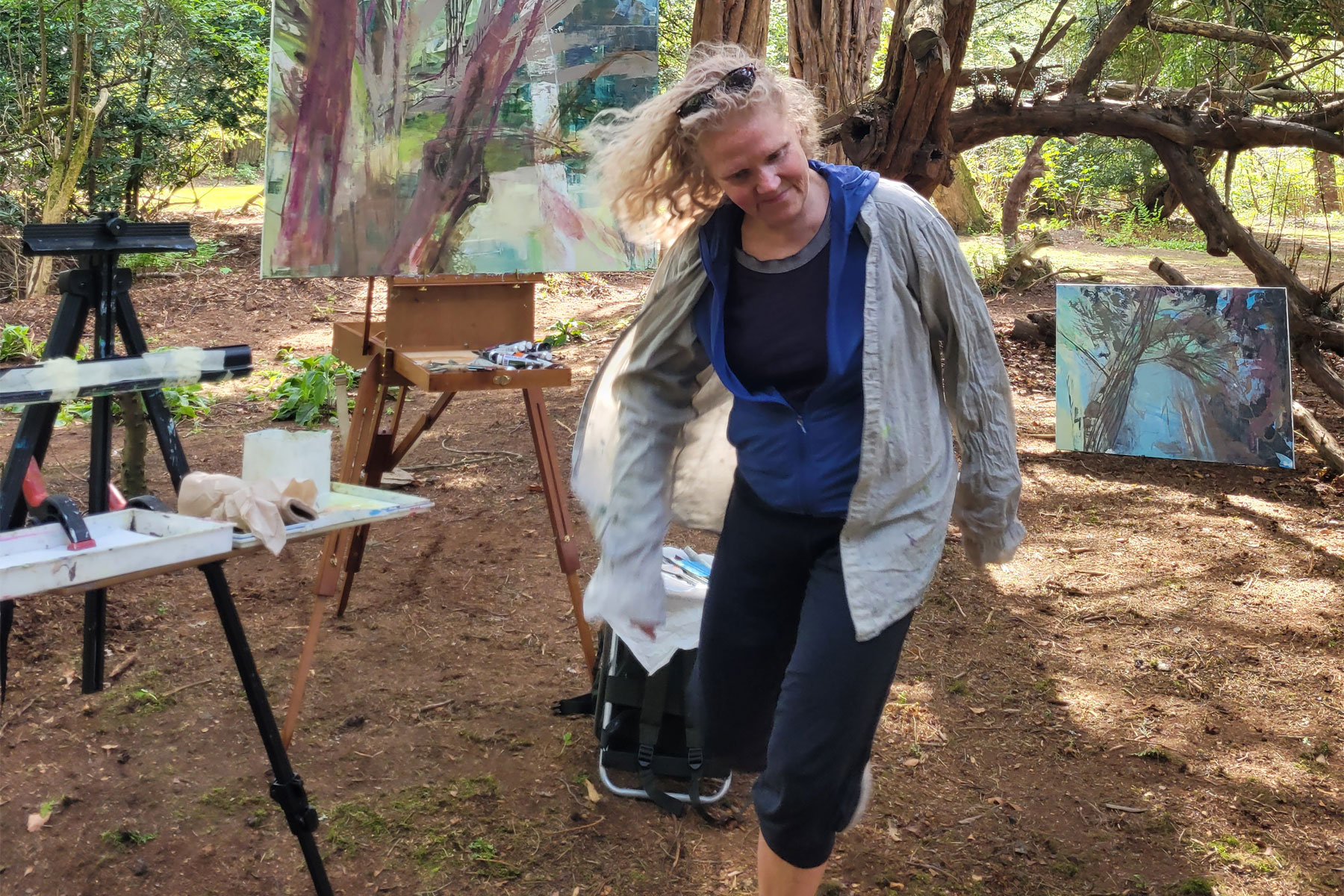
Last week, the sun was shining in Scotland, and everyone seemed to be out enjoying it. I took full advantage, spending three days painting in the landscape at Limefield House, a Georgian mansion near West Calder.

In October, I was commissioned by Limefield House to create work about the ancient yew trees on the property—some more than 1,000 years old. They grow in a strange promenade (no one is quite sure why), winding through other striking trees like Monkey Puzzle and Canadian Redwood. The commission is wonderfully open—simply to make paintings—which has felt like a dream come true.

Over the past few months, I’ve approached the project from several angles. I’ve researched the folkloric significance of yews and explored painting ideas in the studio. But from the beginning, I knew I wanted to work on location as soon as the weather allowed. I wanted to experience the beauty and mystery of these trees firsthand and carry that into the paintings.

I had already tried working at Limefield in March, on a day with 27 mph winds. In those conditions, a large canvas on an easel acts like a sail. More than once in my career, I’ve watched a painting cartwheel across a field—even in much lighter winds!

So when I saw that this week would finally bring warm, stable spring weather, I headed straight back to Limefield. It was everything I hoped for—three glorious days of sunshine and calm. Apart from the midges (who seem to adore me), it was the perfect experience.My upcoming RSA residency – painting in the landscape of Lewis

Carpe diem (Las mesas afternoon) painting by Michele Marcoux
Carpe diem (Las mesas afternoon) by Michele Marcoux

Preparing for Lewis

Also this week, I’ve been re-editing my artist’s statement—something most artists dread, myself included! While the goal was to refresh the copy for my website, it also became a chance to reflect deeply and clarify the direction of my work. This process comes at the perfect time, as I prepare for my upcoming RSA residency on the Isle of Lewis, which begins on May 11th.

For this project, I’ll be exploring the overlap between personal and collective memory. My focus will be a croft house near Stornoway and the surrounding landscape north of Tolsta, along the island’s east coast. I’ll be painting on location in the landscape and experimenting with contemporary methods both outdoors and inside the house.

While working under the trees at Limefield this week, it felt like the right moment to consider the different strands of my practice—how both studio-based and landscape painting have evolved over the years. My thoughts traced all the way back to the beginning, to my early days growing up in Ohio.

Learning to be an artist

I started painting in the landscape as a teenager in Cleveland, Ohio. In the 1970s, I attended Saturday classes at the Cleveland Institute of Art, where we were taught to paint from observation—mostly using live models. But when the weather was good, we were sent outside to study the landscape.

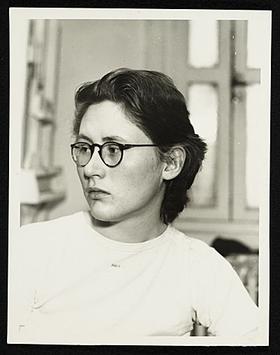
As a young student at Bennington College in Vermont, I encountered a shift in teaching. The school was moving away from traditional technique and leaning toward more conceptual approaches. During that time, I completed a short internship with New York artist Nell Blaine, who had a deep love for painting the landscape.

A protégé of Hans Hofmann, Nell moved in a prestigious circle of New York artists and poets in the 1940s and ’50s. Her community included John Ashbery, Frank O’Hara, Willem de Kooning, Kenneth Koch, Lee Krasner, Jane Freilicher and Robert DeNiro Sr. She was also a founding member of the Jane Street Gallery—the first artists’ cooperative in New York.

Nell began her career as a realist. Her style evolved into abstraction, inspired by Piet Mondrian, Fernand Léger, and Jean Hélion. In the 1950s, her abstract expressionist work gained significant acclaim, with critics like Clement Greenberg praising her achievements.

Nell Blaine as a young artist
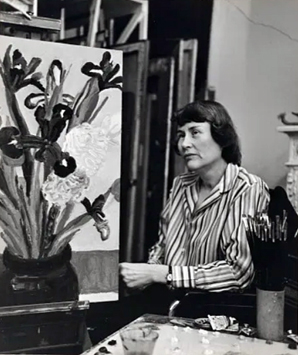
Nell Blaine in her studio

An artist's hardship and resilience

Everything changed tragically in 1959 when Nell contracted polio during a trip to Greece. After eight months in hospital, confined to an iron lung, she was told she would never paint again. Amazingly, through extended physical therapy, she regained the use of her hands—though she used a wheelchair for the rest of her life.

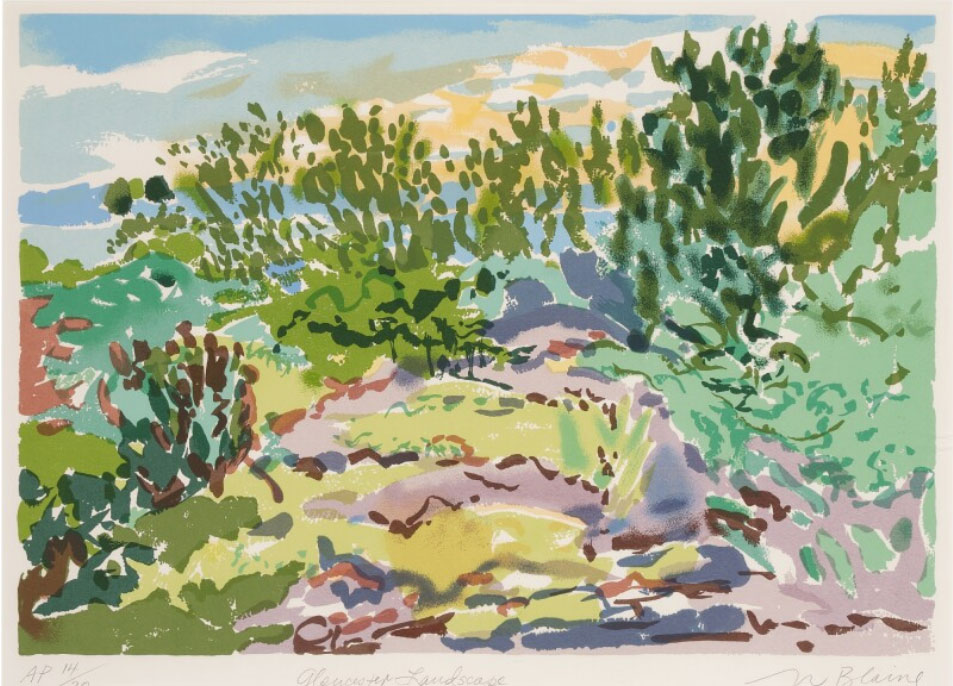
When I met Nell in 1980, she was working from a studio in the small Riverside Drive apartment she shared with her partner, Carolyn Harris. Her style had shifted dramatically from her Abstract Expressionist beginnings to landscapes—beautiful explorations of color and the interplay of light and shadow. Her subjects, shaped by the constraints of her New York life, often included the Hudson River (seen from her apartment window), vases of flowers, still lifes, interiors, or her garden in Gloucester, Massachusetts. Her work embraced nature and the beauty of everyday moments.

How to be unfashionable

Nell’s move away from abstraction toward landscape painting was unfashionable at the time. Some New York critics openly dismissed her. Still, Nell was part of a group of highly respected women artists who were finally gaining the recognition they deserved. In 1979, Eleanor Munro published Originals: American Women Artists. Nell was interviewed alongside Louise Bourgeois, Georgia O’Keeffe, and Alice Neel.

While I was on my internship, Nell invited me to a reception for the book at her Madison Avenue gallery. Unbelievably, she couldn’t attend—the lift was broken. With no mobile phones back then, I didn’t know why she hadn’t shown up. I’ll admit, I felt a bit sorry for myself, insecure and smoking in a corner. Eventually, I pulled myself together. In the end the night was fantastic. Artist Alice Neel held court in the middle of the gallery, and later I ended up downtown having an interesting time with one of Louise Bourgeois’ assistants. But that’s another story!

Good advice from an older artist

In my short time with Nell, I learned a great deal about listening, observing, and paying attention to the needs of others. She was direct about what she needed as a disabled person—“for god’s sake, don’t sit next to someone who’s coughing on the subway!”— but just as forceful when it came to being an artist. “Don’t be tricky” was one of her mantras.

What stayed with me most was her resilience and unwavering commitment. Nell often worked through the night, when New York was finally quiet, then slept through the day. She wasn’t afraid to make creative decisions that ran against the trends of the time.

Despite the many hardships she faced, she remained entirely herself. and her art reflected this.

Landscape painting by Nell Blaine depicting Gloucester, Massachusetts
Nell Blaine's painting, Gloucester landscape

“The artist needs a permissive atmosphere. I am not involved in impressionism, and I have turned from my former total abstract presentation. Mine are action paintings. I want to be surprised by what I am doing. An artist must be his own leader, no matter what direction he takes.”

Nell Blaine, artist

Searching for a room of one's own

Painting in the landscape continued to influence me while I completed my degree at the University of Pennsylvania in Philadelphia, where painter Neil Welliver was a major figure. After graduating, I moved to Berkeley, California. Inspired by artists Richard Diebenkorn, and Georgia O’Keeffe (with her mobile studio in a Model A Ford), I began taking trips into the stunning Northern California landscape to paint. At the same time, I supported myself with a waitressing job.

Later, I returned to New York City, and eventually moved to Edinburgh. There, studio space was prohibitively expensive, so I worked outdoors out of necessity. For a long time, I saw this as a disadvantage. But the upside was working in the incredible places I have visited over the years —France, Italy, Scotland, Spain, Sweden, Tanzania, the USA, and Vietnam.

Even so, painting in the open air, especially in the Scottish climate, has its limits. I came to understand how important it was to let work ‘germinate’—to have room for experimentation, to explore new materials and methods, and to reflect in a quiet, comfortable space.

In 2008, I was finally able to rent a studio in Edinburgh. My practice expanded rapidly. A dedicated workspace changed everything for me. It gave me the independence, ambition, and focus I had long been seeking. (Thank you, Virginia Woolf and Internet Archive.)

Painting in the landscape gives memory a visual form

So what does all this mean for my practice—and that elusive artist’s statement? Growing up in Ohio, moving across the U.S. multiple times, living through the chaos of 1980s New York City, and finally settling in Scotland in the 1990s have all shaped how I work.

I’ve had a dedicated studio for 17 years, but working outdoors remains central to my practice. Painting in the landscape continues to excite me. It brings an energy to my work that I can’t find anywhere else.

In essence my work is about giving memory a visual and physical form. I am interested in narratives of transformation and displacement how they are mirrored in personal memory and collective experience and expressed through the process of painting. Myth, story, memory – the stories we tell ourselves – are matter to be transformed. The materials I use, the places where I work (often outdoors) are an essential part of this approach.

The imagined landscapes of my paintings in the studio are created through a deep understanding of real landscape, obtained through working outdoors. Often remote or abandoned, these resonant places contain hidden and unfolding histories which reflect my own life experiences. Painting in these places (or drawing or making video) works like an embodied memory. Walking to my destination, working in the light and movement of nature becomes a meditation on being present in time. I am in a contemplative place of action and response where thinking stops. Paint in itself resonates with transformative possibilities; texture, gesture, colour, layered over time, echo the ancient pursuit of transforming base material into something beautiful and enduring.

Ancient trees

A commission to capture ancient yew trees

At the end of 2024 I was delighted to receive a commission from Limefield House, a Georgian property outside Edinburgh, to create paintings inspired by the yew trees on the grounds. Limefield House, built in 1805, is steeped in history and surrounded by remarkable trees: monkey puzzle, Canadian redwood and a promenade of yews estimated to be more than 1,000 years old. The yew tree project is to create two large paintings but in the process I will develop a body of work including paintings, drawings, photographs and possibly time-lapse video. I want to dive deep, researching the cultural and spiritual significance of the yew and also get to know the Limefield trees. The commission is quite open and I plan to follow where my research and imagination take me.

In the coming months as the spring weather settles, I will visit regularly to make drawings and paintings of the trees in situ which will help development of work in the studio. The invitation by the owner to visit Limefield whenever I wish is so generous. The prospect of spending time with these ancient trees is thrilling.

Working at Limefield

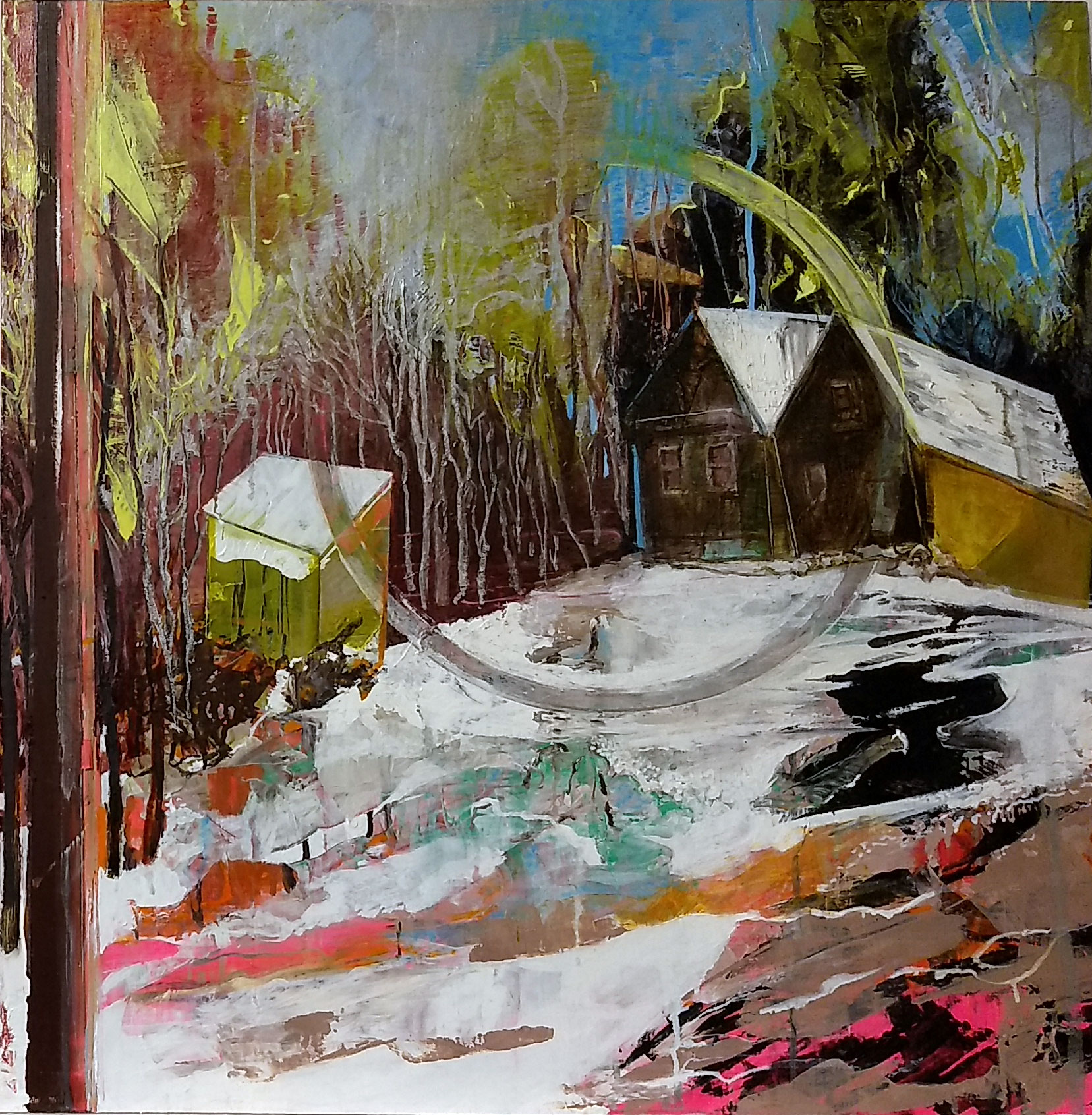
My art practice explores our shared yearning for meaning and connection in an increasingly fragmented and uncertain world. I often work outdoors and investigate landscape as a means to navigate the unknown, déjà vu, and the passage of time. I look for connections and disconnects, intersections of personal and collective memory which become the threads that I follow. Using paint, found imagery and stencilling, I create layered, dreamlike works.

Working in nature and especially with trees has been a part of my practice from the very beginning when I was a young teenager. But I still get a thrill at the prospect of a day spent outside working to capture what I see. For this project I plan to experiment with materials to explore dynamic form as well as the atmosphere surrounding the trees. I will take these studies back to the studio to develop larger paintings and drawings. As the weather improves I hope to make large works outside.

Starting the yew tree project: drawing outside

Feb 27th was the first day I spent drawing at Limefield House. Clear and still and a bit warmer than it had been for a few weeks, it was nonetheless a cold winter day. Weather (especially in Scotland) means that work often has to happen very fast, which is almost always a good thing. Engaging with what you are doing is difficult if you are too hot or too cold, but improvisation can lead to good ideas and surprising things surface when you don’t think too hard about what you are doing.

Yesterday for example while sitting with freezing fingers trying to draw the complex forms in front of me, I hit upon using a highlighter pen with the charcoal to get a quicker result. I really liked the effect and plan to explore it on a much larger scale.
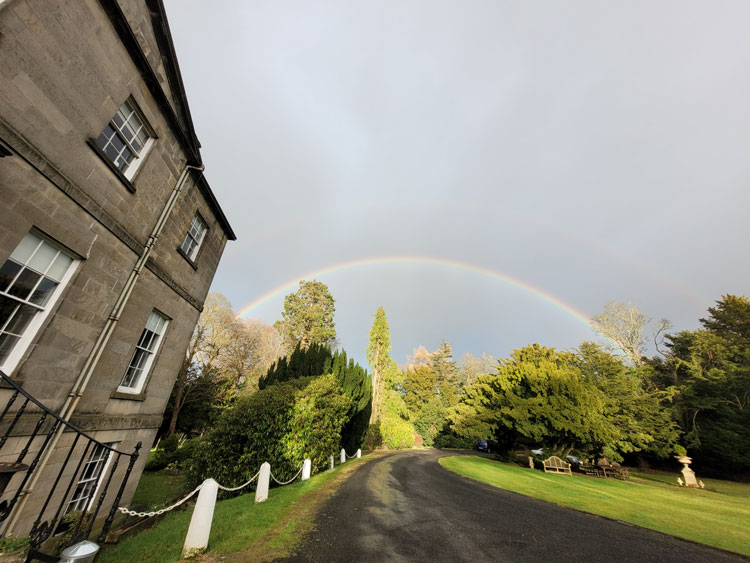
Rainbow over Limefield House after rain during the Yew Tree Project


The significance of yew trees

I have always been drawn to eerie, haunted places and the trees at Limefield have an uncanny quality. The pattern of the trees’ growth is unexpected and strange. They appear like ribbons twisting from the earth or intertwined figures growing in and out of each other.

Because they are evergreen and so long lived, yew trees have been associated with death and everlasting life for centuries. Of great importance to Druids they were planted at sacred places and burial grounds. As these places were replaced by Christian churches, and the yews remained, the trees became significant within Christian traditions. It is unclear why the yews were planted at Limefield house – they predate the house and possibly the fortified tower that once stood here. But the mystery adds to the atmosphere of this place.

The history of Limefield House

There has been a house at Limefield for several hundred years and the present building dates for 1805 when it was built for Mr GloagWS an Edinburgh Lawyer and later a Judge. In 1855 it became the home of the Chemist James ‘Paraffin’ Young who founded the Paraffin Industry and was responsible for creating the very first oil refinery in the world. James Young was also a good friend of the legendary explorer and adventurer Dr David Livingston, who often stayed at Limefield  and planted the large Corstorphine Sycamore tree in the centre of the front garden in 1860. Livingstone also gave Young sketches and watercolours of Victoria Falls, inspiring him to create his own version in the grounds of the house.

Limefield has been a family home since 1999 and also provides venue facilities, as well as Bed and Breakfast to local, national and international visitors from  around the world. 

The story of objects is the story of ourselves

Making work from memory and displacement

I am a painter based in Edinburgh, Scotland working across painting, collage, video and installation. Inspiration happens throughout the creative process. Like many artists, I am drawn to colour, found objects, memory and both real and imagined places. I don’t wait for inspiration; it is through making work that ideas and connections emerge.

In 1990 I moved from the USA to Scotland, an experience that continues to shape my work. I often describe painting as a way of restructuring what I see and remember. By bringing together different materials, images and fragments of experience, I try to create work that moves between personal memory and collective history.
From Brooklyn to rural Scotland

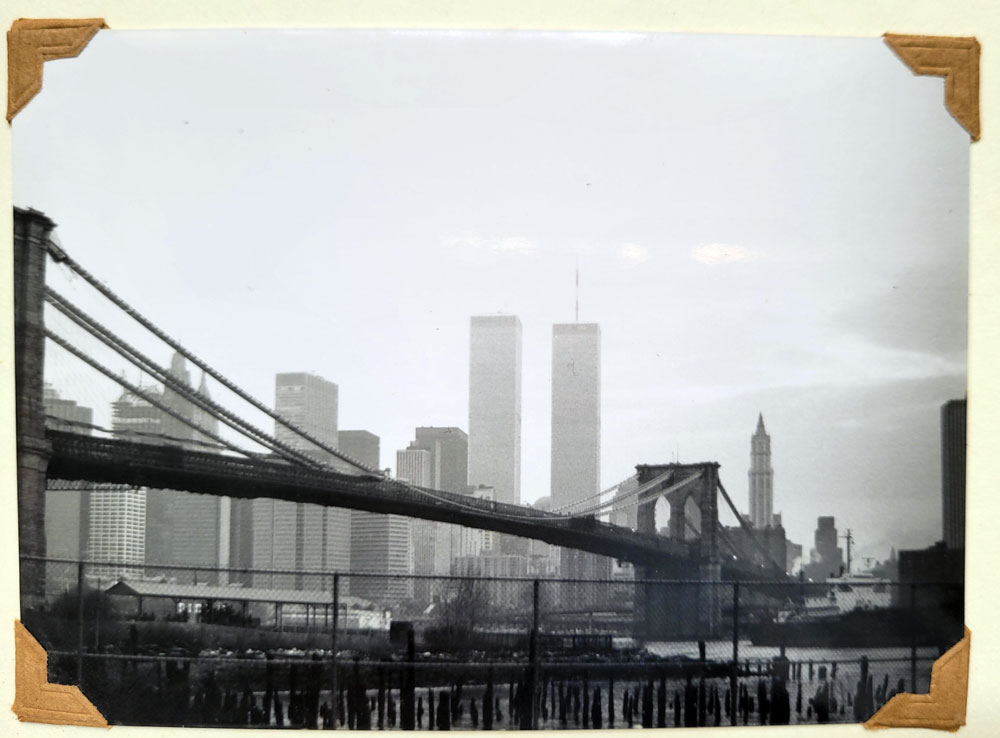
Life experiences inspire my artwork. This is a black and white photograph of Brooklyn Bridge and the Twin Towers taken in 1988
The view from Brooklyn, 1988
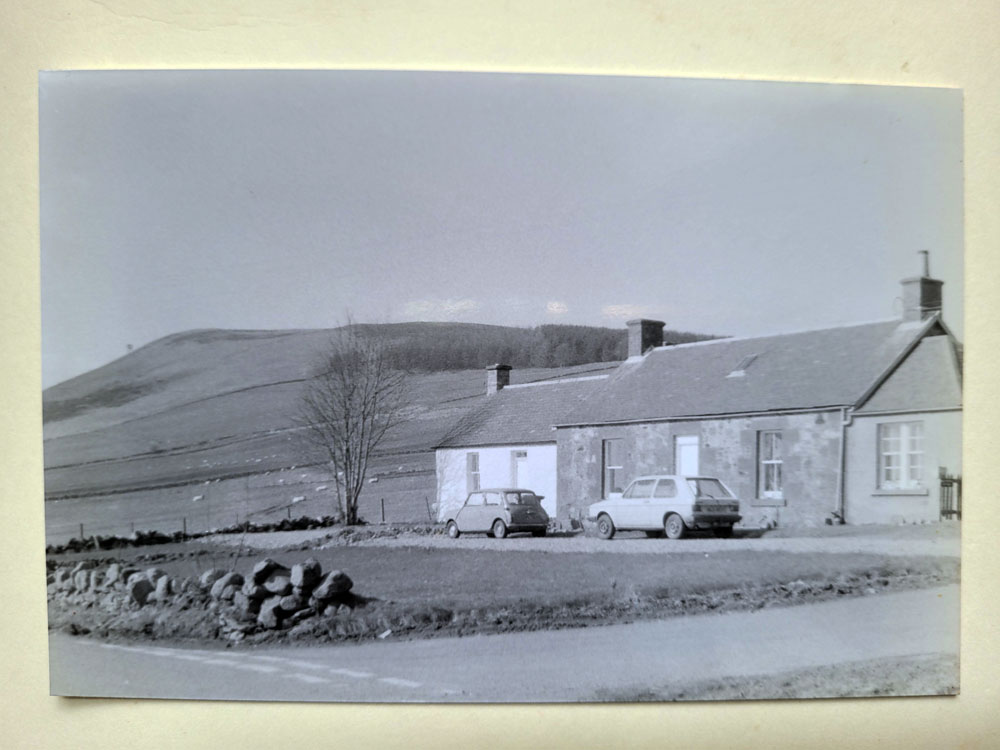
Life experiences inspire my artwork. This is a black and white picture of a farm cottage where I lived when I first moved to Scotland.
Easter Peel Cottage (right), Lintrathen, Angus, 1990

I grew up in Cleveland, Ohio before living in Vermont, Philadelphia, California and New York City, where I met my Scottish husband. In 1990 we left Williamsburg, Brooklyn for a sheep farm in rural Angus.

The contrast could not have been greater. I went from East Village bars to Women’s Institute coffee mornings. The farm cottage we rented was freezing, heated by a coal fire with an electricity meter that took coins. At first the move felt like an adventure, but over time I became aware of the deeper displacement involved in leaving one country and building a life in another.

In pre-internet 1990, migration involved a genuine rupture with the past. Letters took weeks to arrive, phone calls were rare and expensive, and flights home happened perhaps once a year. That distance created both freedom and loss. The experience continues to inform how I think about place, memory and belonging.
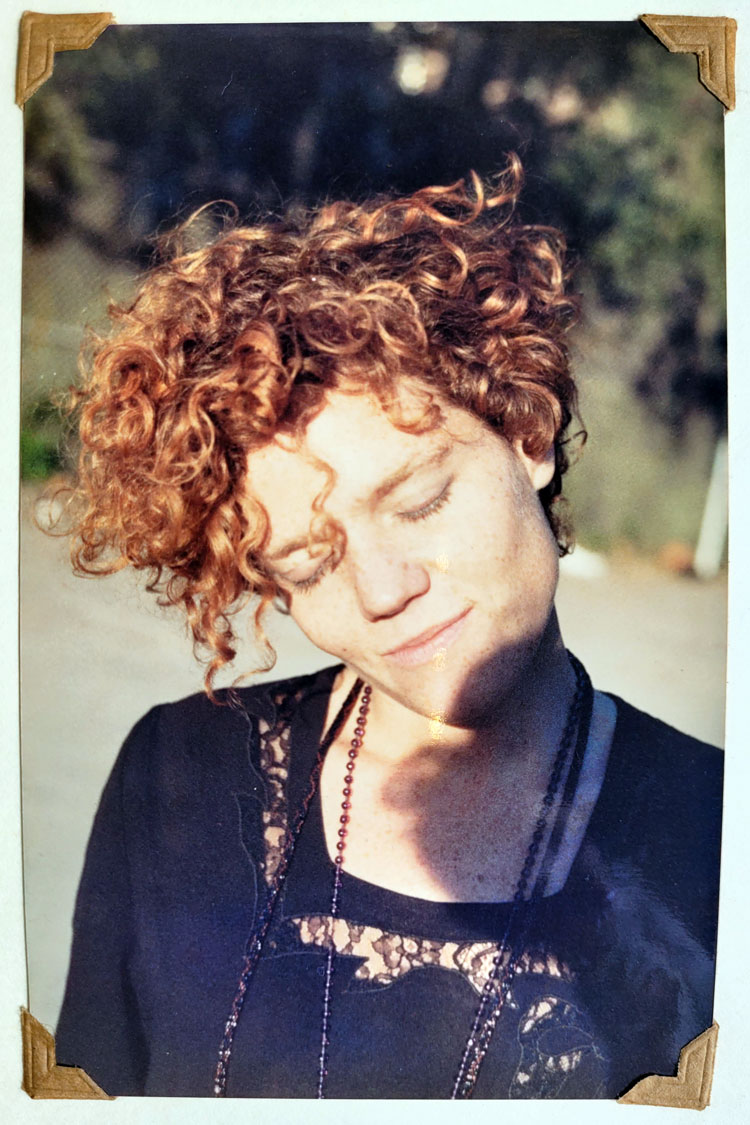
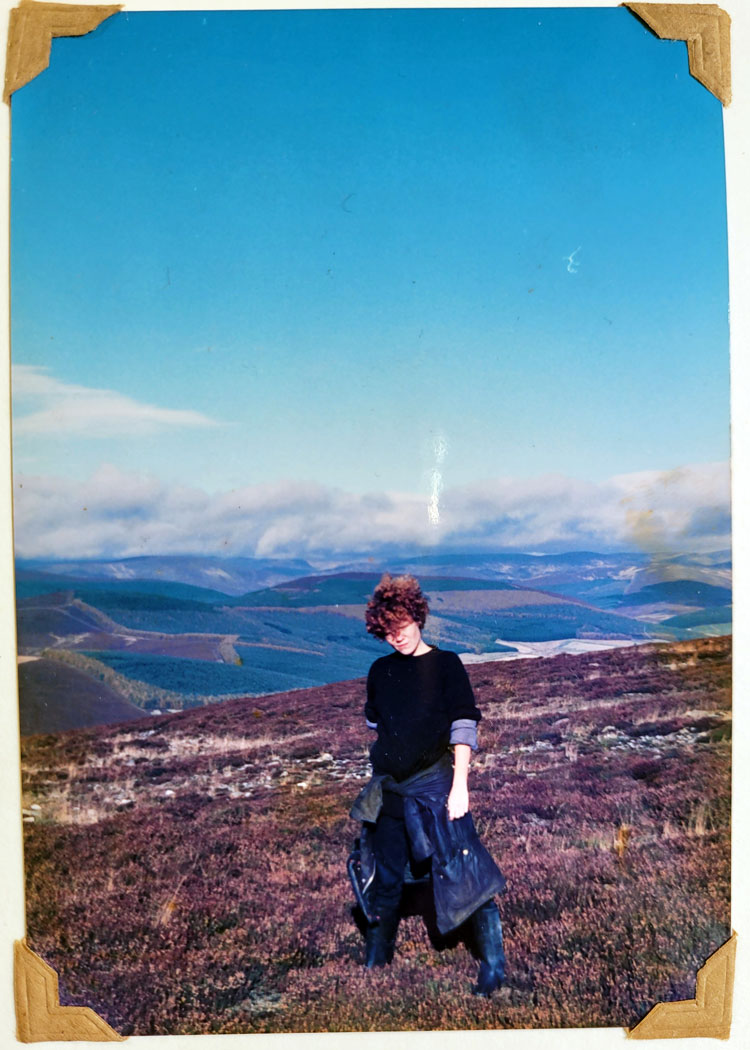
At Thompkins Square Park, Manhattan, 1988
Up a hill, Dykends Crossroads, Perthshire, 1990

The story of objects

For many people who migrate, ideas of identity and home become unstable. Objects begin to carry emotional weight, acting as reminders of people, places and former lives.

In the studio, found objects and images become material to think with. Narratives, memories and visual fragments overlap through painting, collage and installation. I am interested in the tension between nostalgia and transformation — how memory can both preserve and distort experience.

In 2023 the last belongings I had left in America arrived in Scotland by container ship after my mother sold the family home. Books, photographs, letters and drawings that had sat untouched for more than thirty years suddenly re-entered my life. Opening the boxes felt strangely disorientating, as if time had collapsed in on itself.

For the first time in decades, home existed in only one place.

Casser Maison

The arrival of these objects led me back to an earlier project inspired by the French-Canadian phrase Casser Maison — literally “breaking the house” — a term associated with clearing a home at the end of a life.

I became fascinated by the emotional complexity of dismantling a home: deciding what is kept, what is discarded and what stories objects continue to carry forward. These ideas continue to shape my work, particularly recent paintings and installations exploring memory, displacement and the traces people leave behind.

In the end, objects are never just objects. They absorb history, longing and imagination. The story of objects is also the story of ourselves.
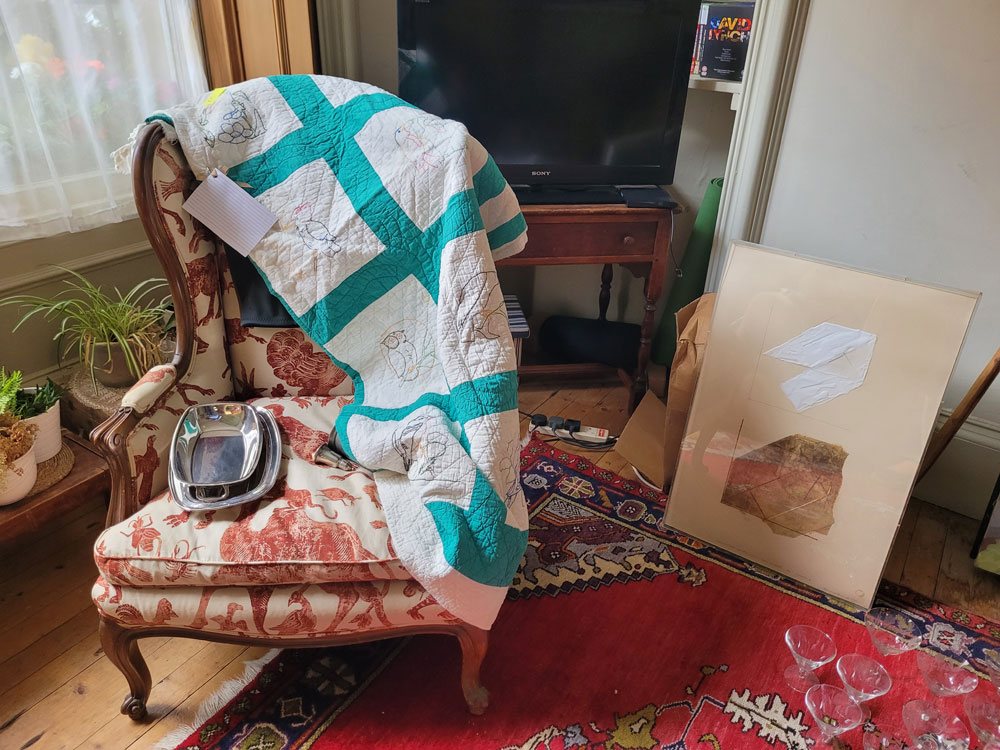
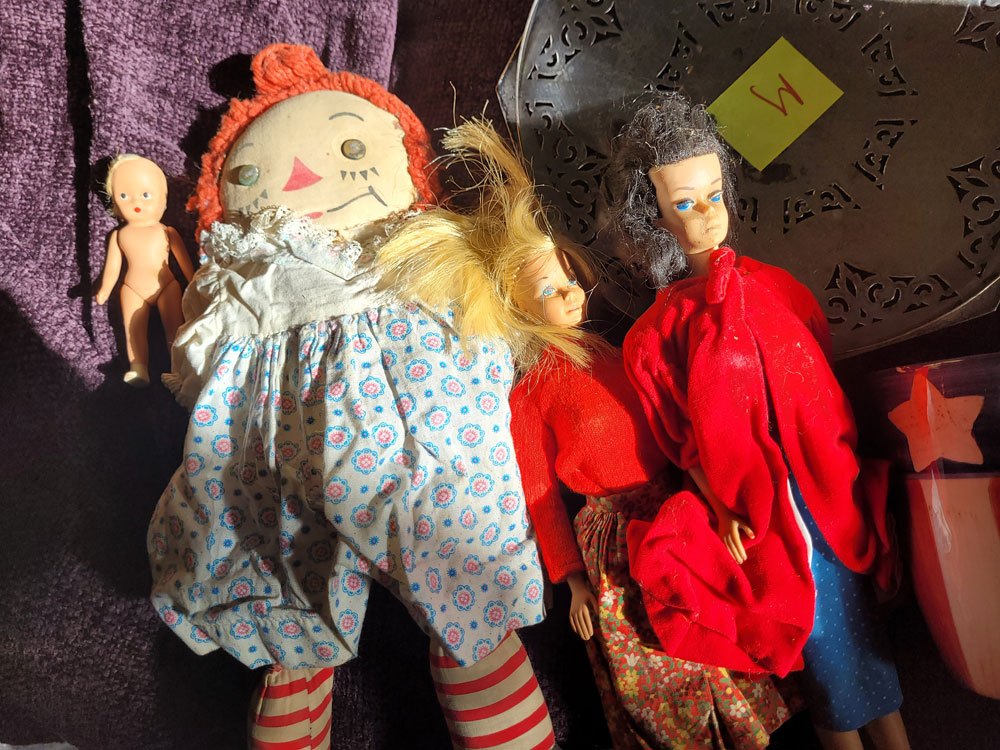
Image of a chair, a quilt and a painting
A chair and a quilt from our house in Ohio, art work by Cleveland, Ohio artist, Ginna Brand, who I apprenticed with as a teenager.
image of dolls, including Raggedy Ann and Barbie
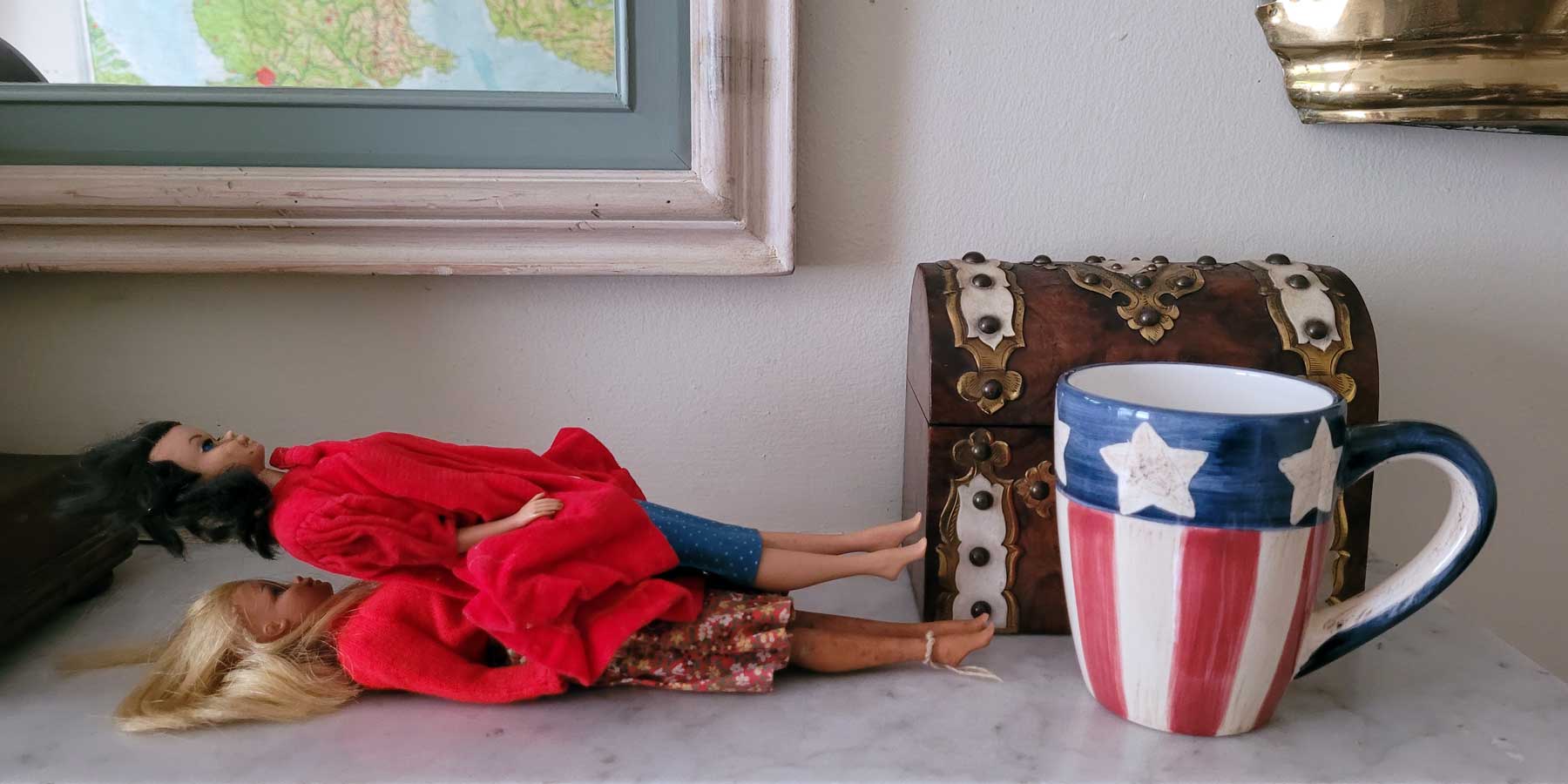
Wee Bridget, Raggedy Ann, Malibu Barbie, and 1950’s Barbie

Jenny nostalgia

Lorem tincidunt. Vestibulum fringilla pede sit amet augue. Praesent adipiscing. Lorem ipsum dolor sit amet, consectetuer adipiscing elit. Cum sociis natoque penatibus et magnis dis parturient montes, nascetur ridiculus mus.

Continue reading

Jenny nostalgia

Lorem tincidunt. Vestibulum fringilla pede sit amet augue. Praesent adipiscing. Lorem ipsum dolor sit amet, consectetuer adipiscing elit. Cum sociis natoque penatibus et magnis dis parturient montes, nascetur ridiculus mus.

Continue reading

Jenny nostalgia

Lorem tincidunt. Vestibulum fringilla pede sit amet augue. Praesent adipiscing. Lorem ipsum dolor sit amet, consectetuer adipiscing elit. Cum sociis natoque penatibus et magnis dis parturient montes, nascetur ridiculus mus.

Continue reading

Jenny nostalgia

Lorem tincidunt. Vestibulum fringilla pede sit amet augue. Praesent adipiscing. Lorem ipsum dolor sit amet, consectetuer adipiscing elit. Cum sociis natoque penatibus et magnis dis parturient montes, nascetur ridiculus mus.

Continue reading