Created entirely from found objects CONSTELLATION emerged from a mystery: an increasing number of foil balloons washing up on a remote beach on Block Island a small island off the coast of New England, a place I once called home.
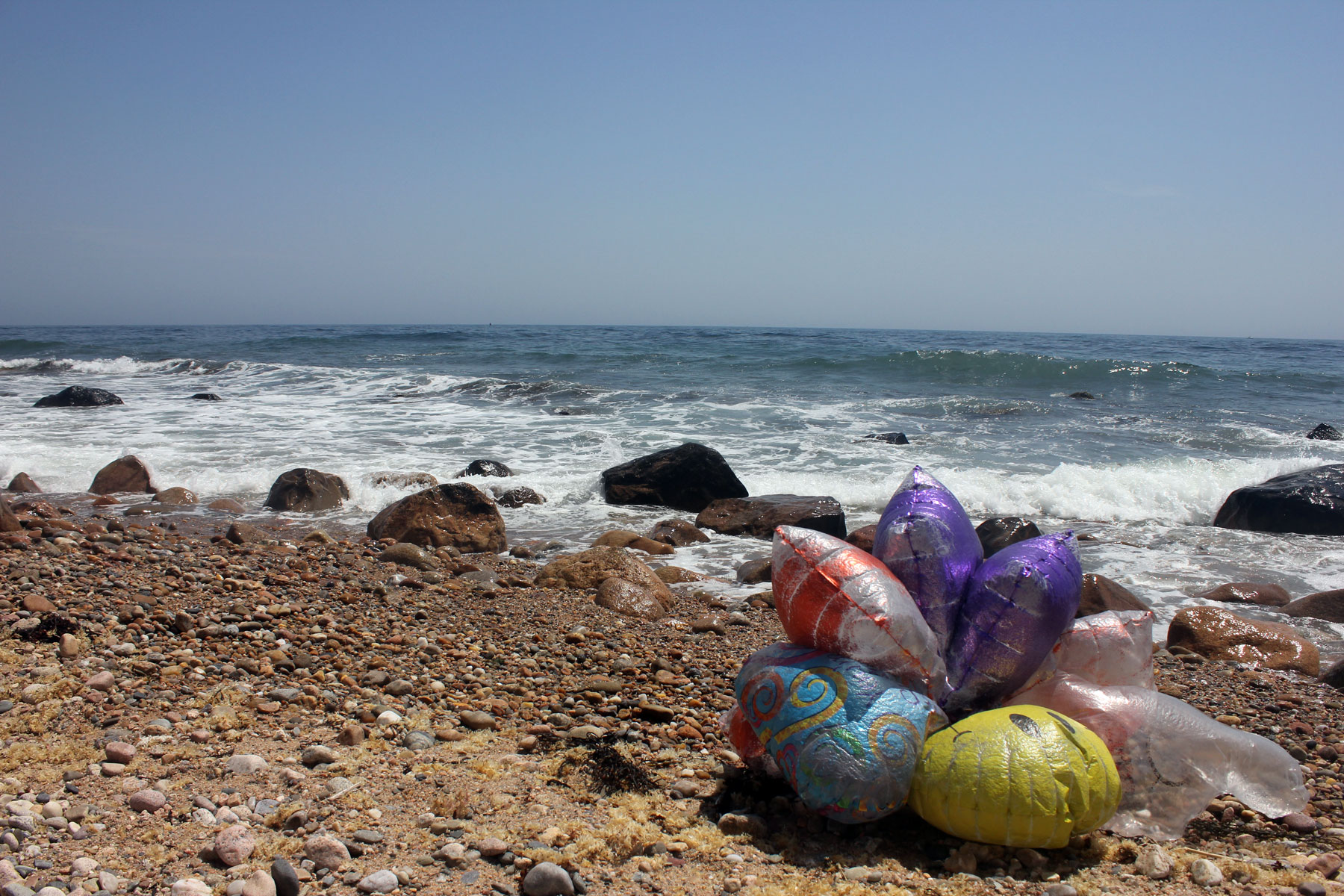
Southwest Point beach on Block Island is a dynamic place, with eroding clay cliffs, massive boulders and waves rolling in off the open Atlantic. Every kind of thing washes up there: trees, fishing machinery, dead animals. We once found the entire skeleton of a sturgeon, over a metre long.
My family have walked this beach since the 1970s, when Block Island was still a relatively sleepy place of fishermen and day-trippers who rarely made it beyond the town and swimming beaches on the east side. We first came to the island in 1974, all the way from Ohio — two days driving in a station wagon, us four kids in the back, my parents in the front. My father was from New England, and the east coast was always where we gravitated.
The West Side
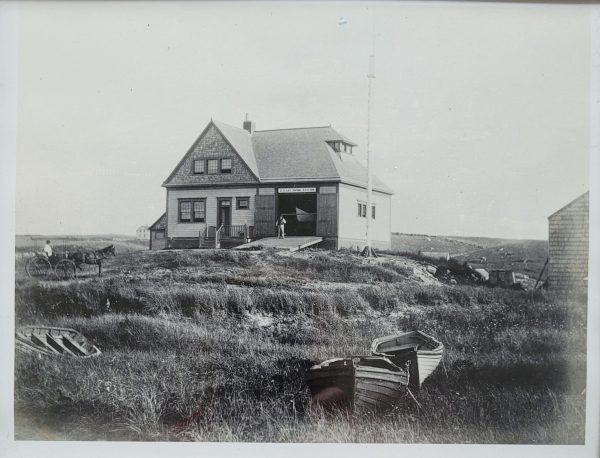
The Lifesaving Station on Cooneymus Road, Block Island
After several summers renting, my parents bought a house: an historic lifesaving station on the west side at the end of Cooneymus road which was five miles from town. The Lifesaving Station was appropriately situated at the southwest corner of Block Island where the Long Island Sound meets the open Atlantic. The many shipwrecks that took place there are part of the island’s history, folklore and ghost stories. My twin sister and I were convinced that the station was haunted. An experience I had of sleep paralysis in the house was a singular one – but that’s another story. By the 1990s my parents had retired to Block Island and moved from the Lifesaving Station to a more comfortable modern house higher up the bluffs, away from the incoming tide but still within walking distance of the beach.
When I moved to Scotland from New York City in 1990, Block Island became home in a different way. Walking from Southwest Point along the beach to Black Rock — a seven-mile loop — became a kind of homecoming ritual. It is a harsh place – definitely not a place for swimming. There is no shelter, only the sea and the looming clay head cliffs that remain inaccessible until Black Rock, where there is a surfers’ beach and path up the bluffs and back inland. It’s best to do the circuit on a calm day at low tide to avoid being cut off and once you begin, you either keep going or turn back.
Raising the dead
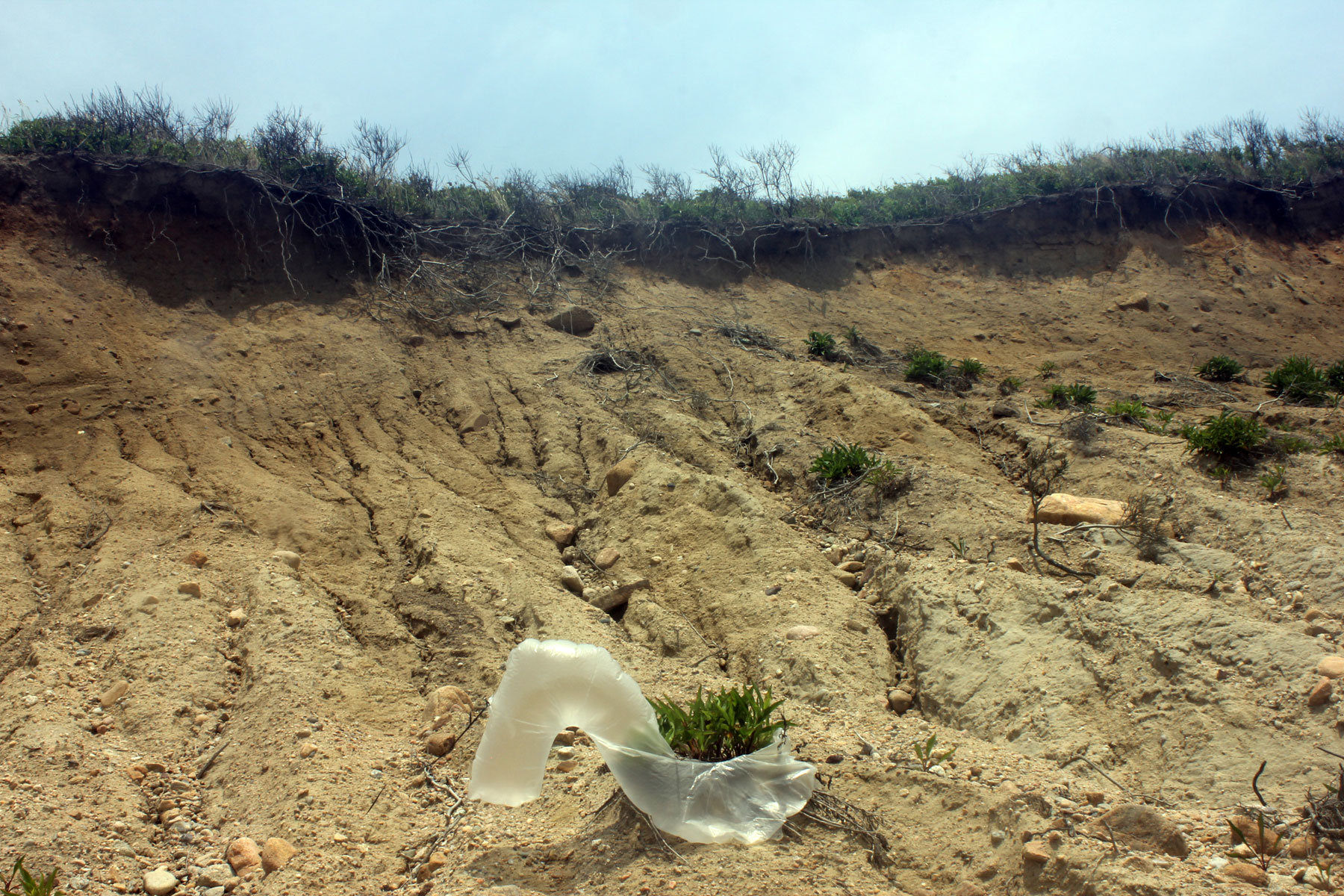
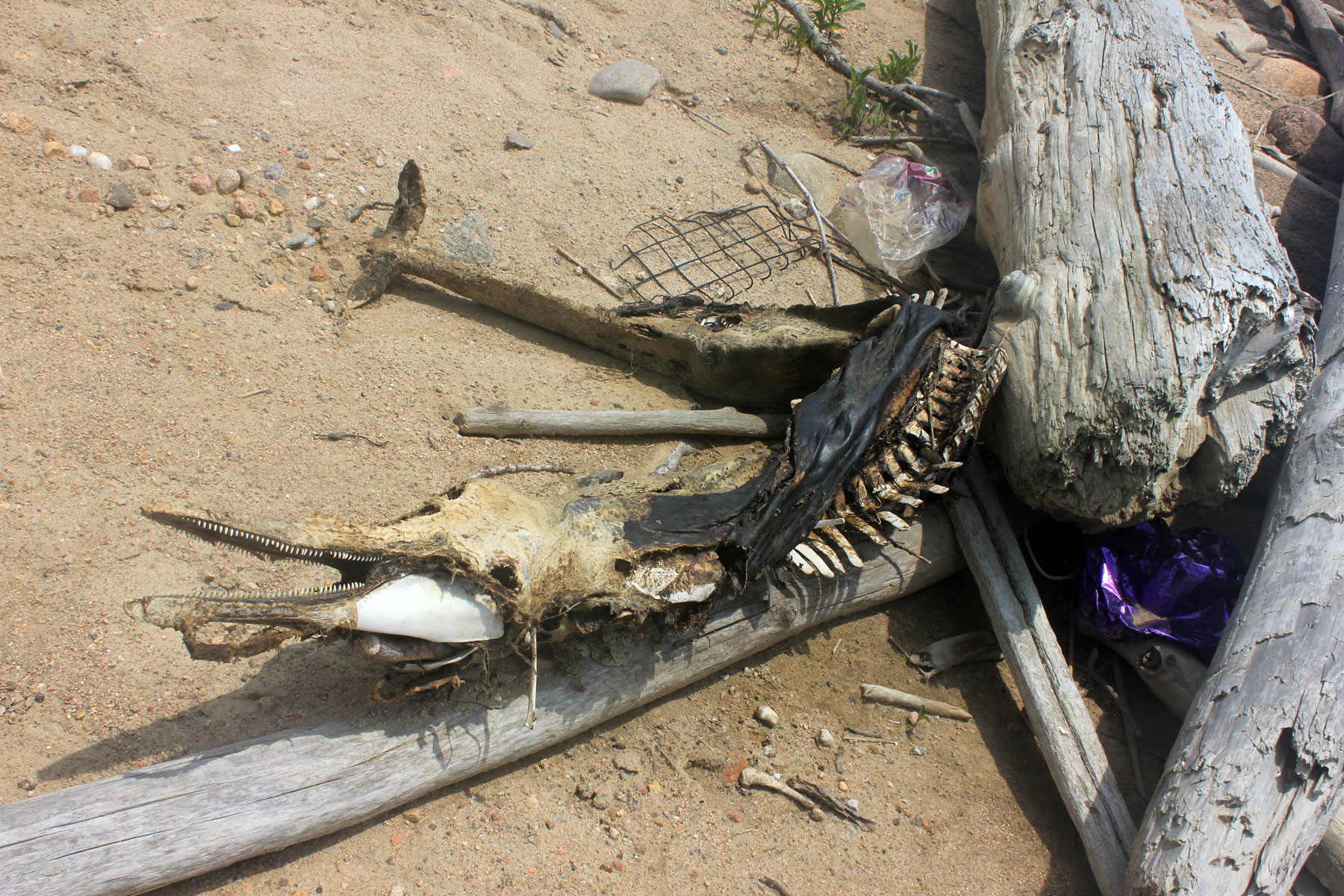
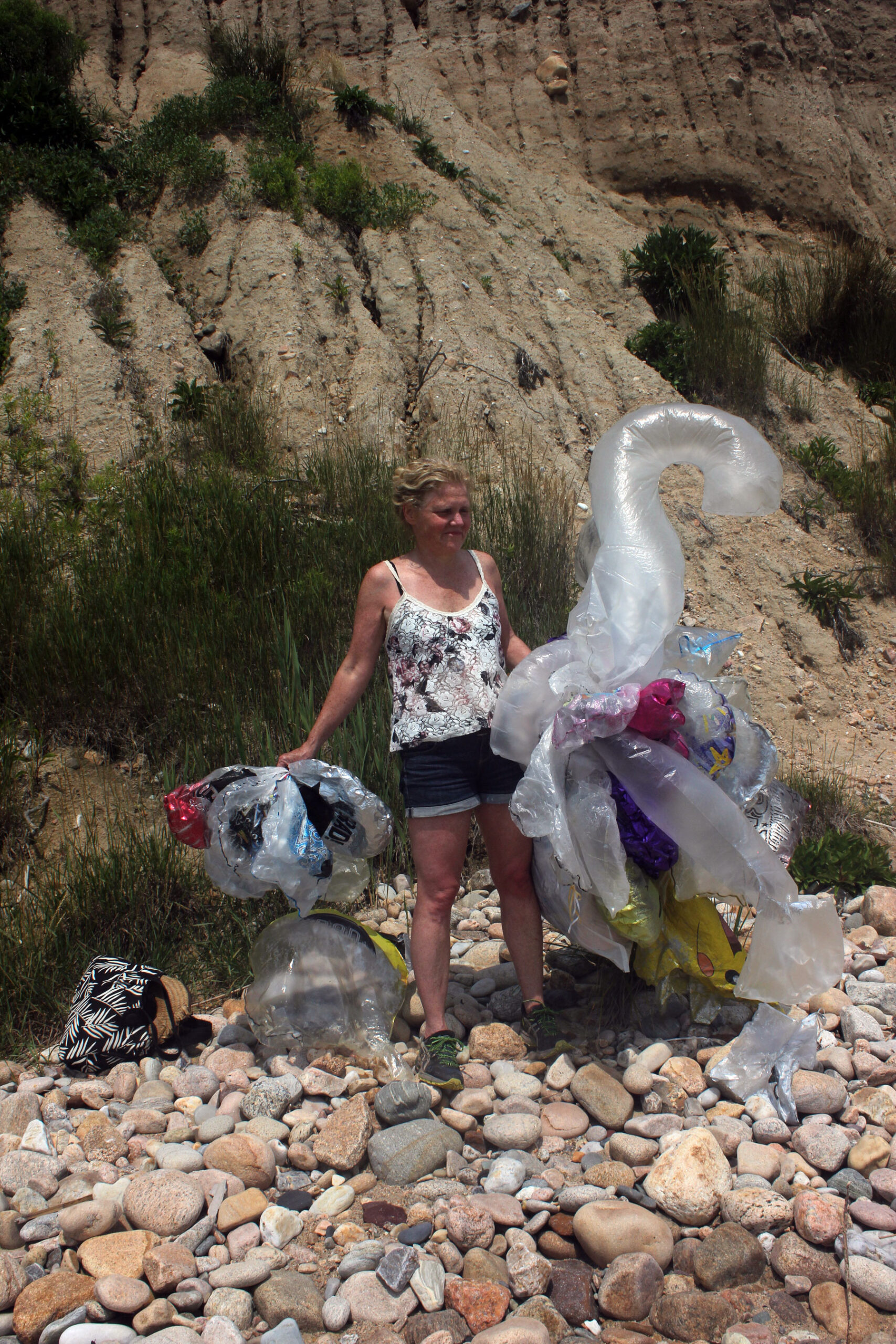
Around 2008, in addition to the usual flotsam, masses of foil balloons began appearing on the beach: clinging to rocks, tangled in seaweed, caught in the cliffs. Instinctively I began collecting them. They were oddly beautiful — eroded messages and colours, strange inflated shapes. Sometimes entire bouquets washed ashore. What began as curiosity slowly became an obsession. I started with one or two, but eventually collected more than a hundred on a single walk. The sheer number was staggering. Where had they all come from? I found myself imagining anniversary parties in Montauk, birthday boat trips on Long Island Sound, graduation celebrations in Point Judith or Newport. The balloons were gestures of celebration that had returned as debris and sometimes death. In 2017 I found a purple plastic balloon wrapped around the skeleton of a dolphin.
A balloon up on the bluffs
A dead dolphin with balloon
Constellation
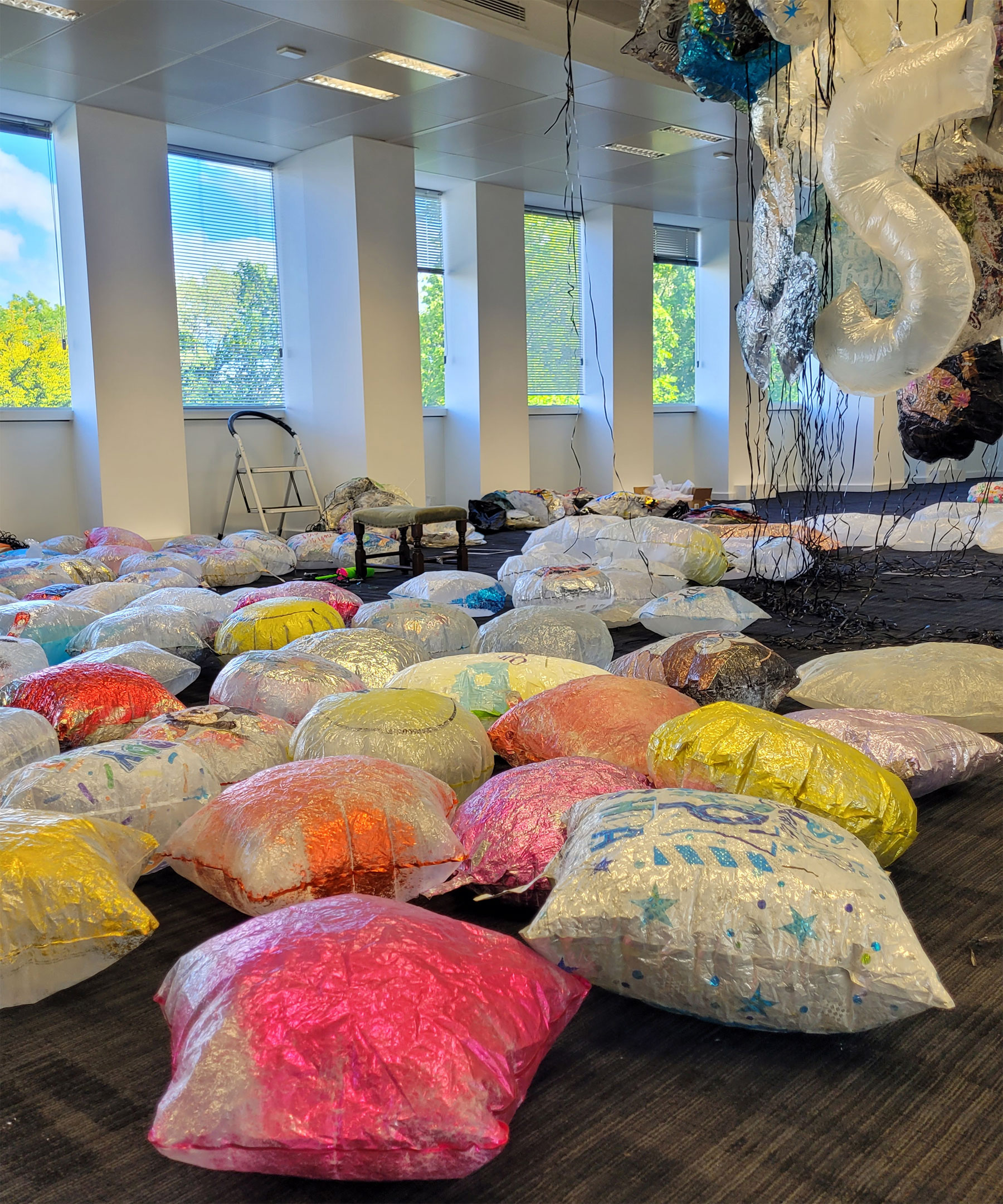
Over the years I have repeatedly worked with these materials in my studio back in Scotland, which became a kind of commemorative act — a way to dispel the cloying nostalgia I find overwhelming. There is something matter-of-fact about their banality, the garish colours, repetitive messages. They are cheap and sentimental, easily manufactured and discarded. Yet in their eroded form they become strangely beautiful. Working with these objects I am returned to the immersive quality of memory, as a place of projection and daydreaming, a slow untangling of meaning and making.
And in the process of making, something else begins to emerge. These scattered objects begin to form a kind of constellation — what Walter Benjamin described as fragments of the past suddenly coming together in the present to reveal a hidden truth about history. In a flash, I see the scale of their proliferation across the planet, and our remarkable ability to remain blind to it.
The relentless cheerfulness of these objects disguises the reality of what they are: environmental blight tangled up with sentimentality, consumption and excess. Yet however beautiful or uncanny they become, you can never entirely escape the darkness at their core.
On Block Island, 2017
My studio, May 2026
Cookie Consent
My site use cookies to improve your experience on the site. By using my site, you consent to cookies.